Learn how a closed-loop indoor gardening system enables zero-waste food production by reusing water, nutrients, and automation at home.
- 🌿 What Is a Closed-Loop Indoor Gardening System?
- 🌿 How a Closed-Loop Indoor Gardening System Enables Zero-Waste Food Production
- 🌿 Role of Sensors in a Closed-Loop Indoor Gardening System
- 🌿 Automation and Intelligence in a Closed-Loop Indoor Gardening System
- 🌿 Key Benefits of a Closed-Loop Indoor Gardening System
- 🌿 Challenges and Limitations of a Closed-Loop Indoor Gardening System
- 🌿 How to Choose the Best Closed-Loop Indoor Gardening System
- 🌿 Smart Indoor Garden System Review Criteria (Closed-Loop Focus)
- 🌿 Who Should Use a Closed-Loop Indoor Gardening System?
- Frequently Asked Questions (FAQ)
- 🌿 Conclusion: Is a Closed-Loop Indoor Gardening System Worth It?
🌱 Introduction
Have you ever thought about growing fresh food at home without wasting water, nutrients, or effort? Traditional indoor gardening often follows a linear path—add water, add nutrients, discard excess, and repeat. Over time, this approach leads to unnecessary waste and inconsistent results. A closed-loop indoor gardening system changes that model by turning indoor gardening into a self-sustaining, resource-efficient process.
In a closed-loop setup, nothing valuable is thrown away. Water is reused, nutrients are carefully balanced, and plant feedback continuously improves the system’s performance. Instead of reacting after problems appear, the system adjusts conditions proactively. This makes indoor food production cleaner, smarter, and far more sustainable than conventional methods.
As homes move toward automation and eco-conscious living, a closed-loop indoor gardening system fits perfectly into modern lifestyles. It combines indoor farming automation, sensor-based monitoring, and intelligent control to create an environment where plants thrive with minimal waste and minimal intervention.
By the end of this post, you’ll clearly understand how a closed-loop indoor gardening system enables zero-waste food production at home, how it works step by step, and whether this smart approach is the right choice for your indoor gardening goals.
🌿 What Is a Closed-Loop Indoor Gardening System?
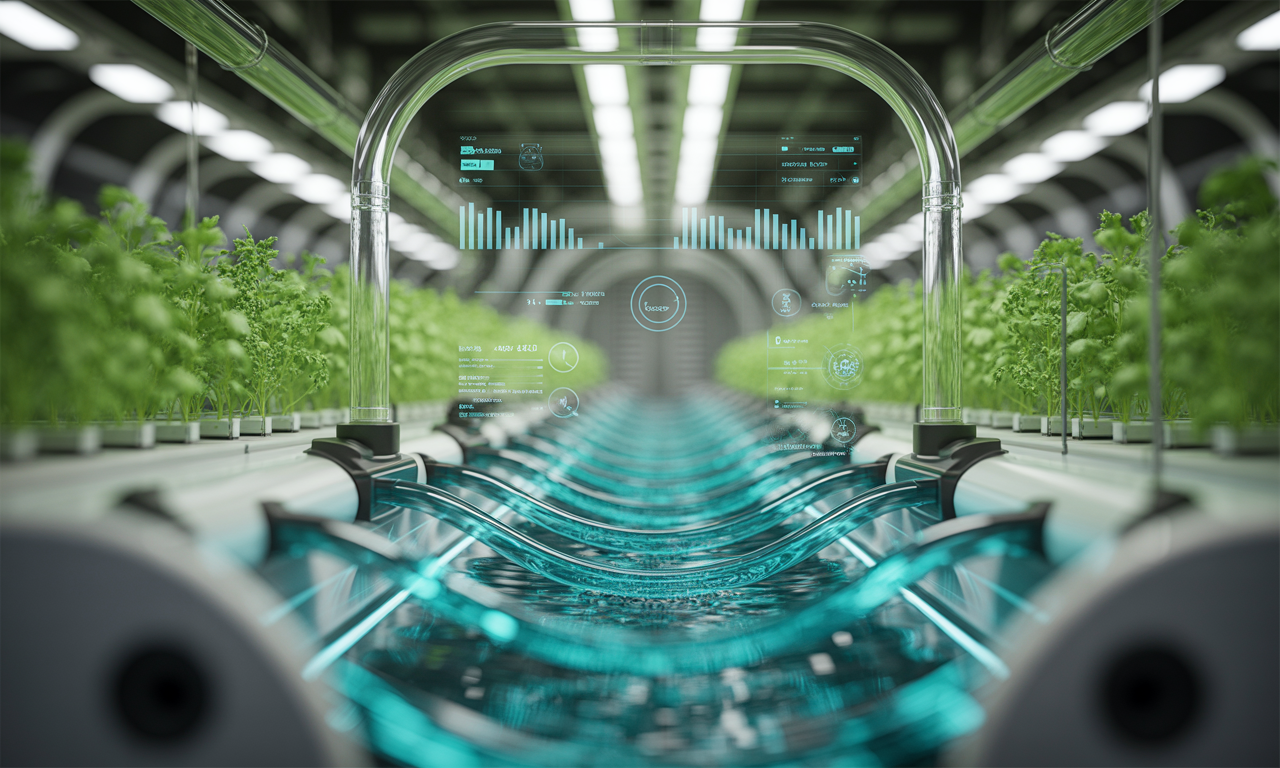
A closed-loop indoor gardening system is an advanced indoor growing setup designed to reuse resources instead of wasting them. Unlike traditional gardening methods that follow a one-way process, this system continuously recycles water, nutrients, and data to support healthy plant growth.
🔄 Linear Gardening vs Closed-Loop Indoor Gardening
The problem:
Most indoor gardens operate on a linear model. Water and nutrients are added, excess runoff is discarded, and adjustments are made only after plants show stress. This results in wasted resources, uneven growth, and frequent corrections.
The explanation:
A closed-loop indoor gardening system works on feedback rather than guesswork. Sensors monitor plant conditions such as moisture levels, nutrient concentration, temperature, and growth response. This data flows back into the system, where automation adjusts inputs precisely.
The solution:
Instead of throwing away unused water or nutrients, the system recirculates and rebalances them. This creates a continuous loop where inputs are refined, reused, and optimized for plant needs.
Pro tip:
The strength of a closed-loop system lies in its feedback cycle—plants constantly “communicate” with the system through data.
🌱 How Closed-Loop Systems Support Autonomous Indoor Plant Systems
A closed-loop indoor gardening system does not rely on fixed schedules. It adapts as plants grow, creating an environment that responds in real time. This approach supports autonomous indoor plant systems that maintain balance automatically rather than waiting for manual correction.
By shifting from wasteful, reactive care to intelligent, responsive management, a closed-loop indoor gardening system forms the foundation for zero-waste food production inside modern homes.
🌿 How a Closed-Loop Indoor Gardening System Enables Zero-Waste Food Production
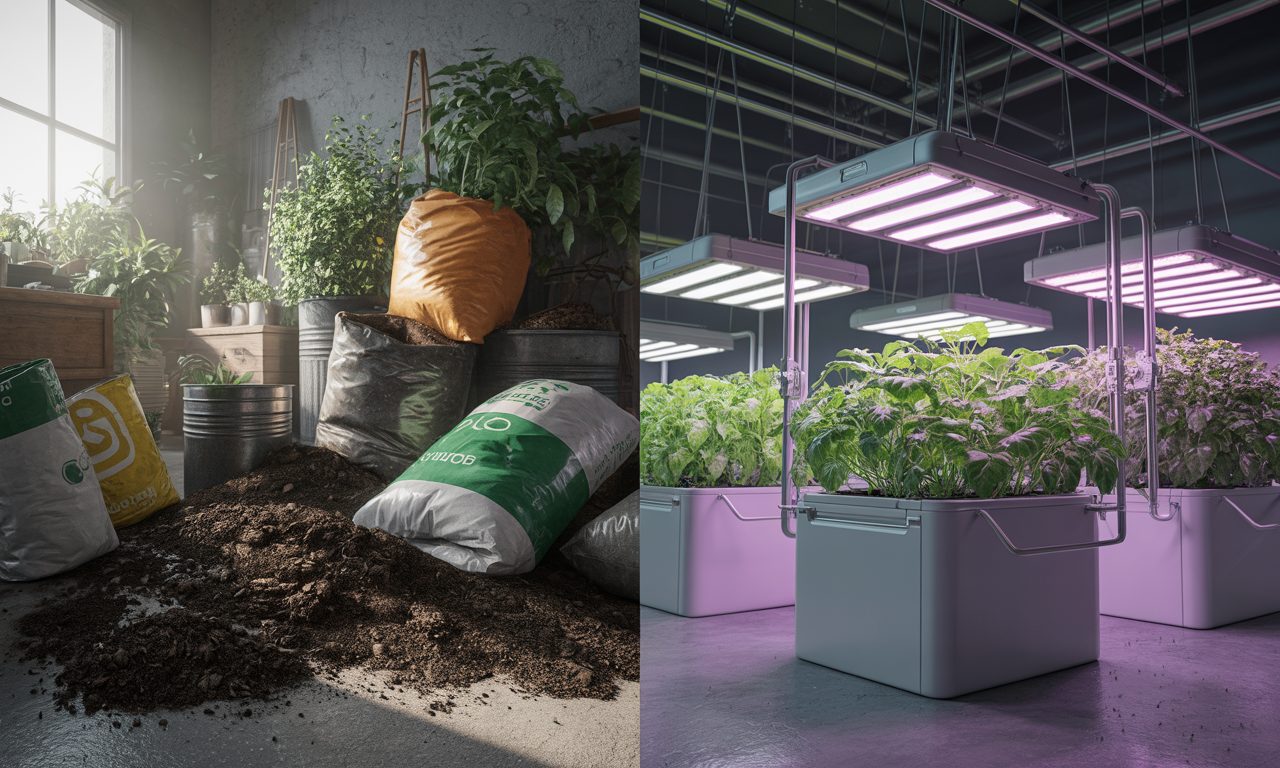
One of the biggest challenges in indoor gardening is hidden waste. Excess water drains away, unused nutrients build up or get discarded, and plants receive more inputs than they can absorb. A closed-loop indoor gardening system solves this by designing indoor food production around reuse, balance, and continuous improvement.
💧 Eliminating Water Waste Through Recirculation
The problem:
In conventional indoor gardening, runoff water is treated as waste. This not only increases water consumption but also washes away valuable nutrients.
The explanation:
A closed-loop indoor gardening system captures unused water and routes it back into the system. Sensors measure moisture levels and water quality before reuse, ensuring plants only receive what they actually need.
The solution:
By reusing water instead of discarding it, the system drastically reduces consumption while maintaining consistent hydration. This makes indoor farming automation far more efficient and environmentally responsible.
Pro tip:
Recirculated water systems perform best when combined with real-time monitoring rather than fixed refill schedules.
🧪 Preventing Nutrient Loss and Overfeeding
The problem:
Nutrients are often overapplied in indoor gardens, leading to buildup, plant stress, and waste.
The explanation:
In a closed-loop indoor gardening system, nutrient levels are constantly measured and adjusted. Instead of flushing excess nutrients away, the system rebalances them based on plant uptake.
The solution:
This creates a precise nutrient cycle where nothing is wasted. Plants absorb what they need, and the remaining solution is refined and reused, supporting smart indoor plant management.
Pro tip:
Balanced nutrient reuse improves root health first, which leads to stronger overall plant growth.
🌱 Turning Indoor Gardening into a Sustainable Food Cycle
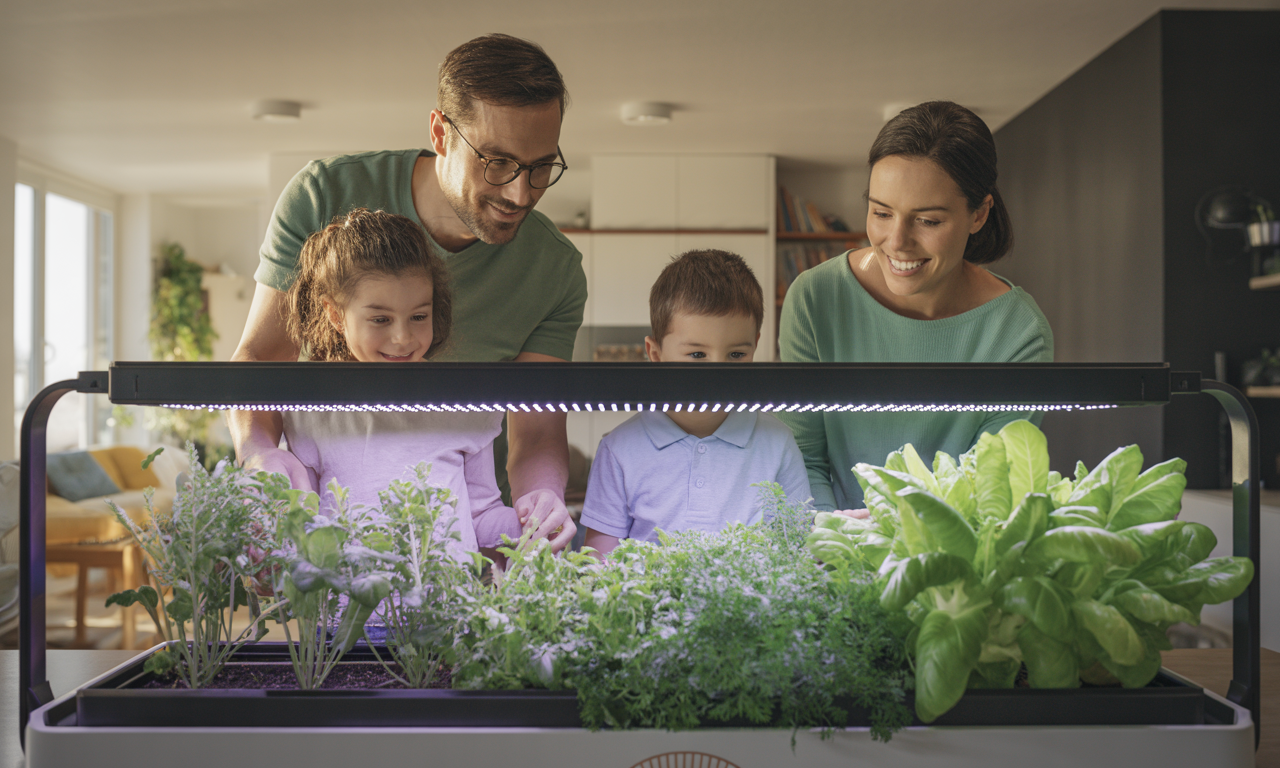
By combining water recirculation, nutrient reuse, and real-time feedback, a closed-loop indoor gardening system transforms indoor gardening into a sustainable food cycle. Waste is minimized, plant health improves, and home food production becomes cleaner and more predictable.
This zero-waste approach is what sets closed-loop systems apart, making them a powerful solution for anyone serious about sustainable, autonomous indoor plant systems at home.
🌿 Role of Sensors in a Closed-Loop Indoor Gardening System
Sensors are the backbone of every closed-loop indoor gardening system. Without accurate, real-time data, the system cannot recycle resources effectively or respond to plant needs. Sensors allow the garden to “listen” to plants and adjust conditions before problems appear.
📡 Sensor-Based Indoor Gardening Explained
The problem:
Manual observation cannot detect subtle changes in moisture, nutrients, or temperature. By the time visual symptoms appear, plants are already under stress.
The explanation:
In a closed-loop indoor gardening system, sensors continuously track critical variables such as:
- Root-zone or soil moisture
- Nutrient concentration and balance
- Temperature and humidity
- Light exposure and plant response
This constant monitoring forms a live feedback loop between plants and the system.
The solution:
Sensor data feeds directly into automated controls. If moisture drops, watering adjusts. If nutrient levels shift, the system recalibrates instead of flushing resources away. This precision enables sensor based indoor gardening that supports true zero-waste operation.
Pro tip:
Systems using multiple sensors together make more reliable decisions than those relying on a single data point.
🔄 How Sensors Enable Autonomous Indoor Plant Systems
A closed-loop indoor gardening system does not wait for human input. Sensors detect changes instantly and trigger corrective actions automatically. Over time, this creates autonomous indoor plant systems that maintain balance without constant supervision.
By providing continuous feedback, sensors ensure that water, nutrients, and energy stay within optimal ranges. This is what allows closed-loop systems to function efficiently, sustainably, and predictably—making zero-waste indoor food production achievable at home.
🌿 Automation and Intelligence in a Closed-Loop Indoor Gardening System
Automation is what turns data into action inside a closed-loop indoor gardening system. While sensors collect information, intelligent automation ensures that every input—water, nutrients, and energy—is adjusted precisely and reused efficiently.
🤖 From Basic Automation to Autonomous Indoor Plant Systems
The problem:
Basic automation follows preset rules, such as watering at fixed intervals or maintaining constant nutrient levels. These rigid systems cannot adapt when plant needs change, leading to inefficiency and waste.
The explanation:
A closed-loop indoor gardening system uses intelligent automation that responds to real-time feedback. Instead of following schedules, it evaluates current conditions and adjusts inputs based on plant response and environmental changes.
The solution:
This adaptive behavior creates autonomous indoor plant systems that self-correct. If plants absorb nutrients faster, the system rebalances. If evaporation increases, watering adjusts automatically. Nothing is wasted, and plants remain in balance.
Pro tip:
Autonomous systems reduce human error while maintaining consistent growing conditions.
🔁 Smart Indoor Plant Management Through Feedback Loops
The problem:
Manual control often reacts too late. Adjustments happen after plants show visible stress.
The explanation:
In a closed-loop indoor gardening system, automation works through continuous feedback loops. Sensor data flows into the control system, decisions are made instantly, and outputs are fine-tuned without delay.
The solution:
This real-time adjustment supports smart indoor plant management, where conditions remain stable and waste is minimized. The system improves efficiency with every cycle, making indoor farming automation more reliable over time.
Pro tip:
Systems that combine automation with learning algorithms deliver the most consistent zero-waste results.
By integrating automation with real-time intelligence, a closed-loop indoor gardening system creates a responsive environment where plants thrive while resources are reused instead of wasted.
🌿 Key Benefits of a Closed-Loop Indoor Gardening System
A closed-loop indoor gardening system offers more than convenience. It delivers measurable benefits that improve plant health, reduce waste, and simplify indoor food production. By reusing resources intelligently, the system creates a balanced environment that supports long-term sustainability.
🌱 Zero-Waste Resource Utilization
The problem:
Traditional indoor gardening wastes water and nutrients through runoff and overfeeding.
The solution:
A closed-loop indoor gardening system recirculates water and rebalances nutrients instead of discarding them. This reduces waste dramatically and supports true zero-waste food production at home.
Pro tip:
Efficient reuse lowers ongoing costs while maintaining plant performance.
💧 Consistent Plant Health and Growth
The problem:
Inconsistent care leads to uneven growth, nutrient stress, and plant failure.
The solution:
By maintaining stable conditions, a closed-loop indoor gardening system supports steady root development, healthier foliage, and predictable yields. Plants receive exactly what they need at every stage.
Pro tip:
Stability is the most important factor in long-term indoor gardening success.
⏱️ Reduced Maintenance and Human Effort
The problem:
Indoor gardening can demand frequent monitoring and manual correction.
The solution:
With automation and feedback loops, a closed-loop indoor gardening system handles daily adjustments automatically. Users spend less time fixing problems and more time enjoying fresh food.
Pro tip:
Minimal intervention reduces mistakes caused by overcare.
🌍 Sustainable and Eco-Friendly Food Production
The problem:
Many home gardening systems are resource-intensive and inefficient.
The solution:
A closed-loop indoor gardening system aligns indoor farming automation with sustainability goals. Water, nutrients, and energy are used efficiently, reducing environmental impact.
Pro tip:
Sustainability improves not only the environment but also system reliability.
By combining efficiency, consistency, and sustainability, a closed-loop indoor gardening system delivers benefits that make zero-waste indoor food production practical, reliable, and achievable for modern homes.
🌿 Challenges and Limitations of a Closed-Loop Indoor Gardening System
While a closed-loop indoor gardening system offers strong sustainability and efficiency benefits, it is not without challenges. Understanding these limitations helps set realistic expectations and ensures smarter system selection.
⚠️ Initial Cost and Setup Complexity
The problem:
Closed-loop systems often require a higher upfront investment than basic indoor gardening setups. Sensors, recirculation components, and automation hardware increase initial costs.
The explanation:
A closed-loop indoor gardening system includes multiple integrated parts—water recovery units, nutrient balancing mechanisms, and monitoring tools. This complexity raises both cost and setup time.
The solution:
Many users offset initial expenses through long-term savings from reduced water use, fewer plant losses, and lower nutrient waste. Modular systems allow gradual upgrades instead of full replacement.
Pro tip:
Start with a scalable system that supports closed-loop upgrades over time.
🧠 Learning Curve and System Understanding
The problem:
Users unfamiliar with automation or indoor farming may find closed-loop systems overwhelming at first.
The explanation:
A closed-loop indoor gardening system relies on understanding feedback loops, sensor data, and basic system behavior. Without this awareness, users may over-adjust or misinterpret system alerts.
The solution:
Begin with guided automation modes and gradually explore advanced settings as confidence grows. Many systems provide dashboards that simplify data interpretation.
Pro tip:
Learning how the system reacts is more important than memorizing settings.
🔌 Dependence on Technology and Reliability
The problem:
Automation depends on power, software, and hardware reliability. Failures can disrupt system balance temporarily.
The explanation:
A closed-loop indoor gardening system needs consistent data flow to function optimally. Interruptions may cause the system to revert to default behavior.
The solution:
Choose systems with fail-safe mechanisms, alerts, and manual override options to maintain control during technical issues.
Pro tip:
Reliable systems prioritize stability over excessive features.
By recognizing these challenges, users can use a closed-loop indoor gardening system more effectively—balancing technology, understanding, and realistic expectations for long-term zero-waste indoor gardening success.
🌿 How to Choose the Best Closed-Loop Indoor Gardening System
Choosing the right closed-loop indoor gardening system is critical if your goal is reliable, zero-waste food production at home. Not all systems marketed as “smart” truly operate in a closed loop, so knowing what to evaluate helps you avoid costly mistakes.
✅ Features That Matter in a Closed-Loop System
The problem:
Many indoor gardening products automate watering or lighting but still waste water and nutrients. These systems may look advanced but fail to close the loop.
The explanation:
A true closed-loop indoor gardening system must actively reuse resources while responding to plant feedback. Automation alone is not enough—recirculation and balance are essential.
The solution:
Look for systems that include:
- Water recirculation instead of runoff disposal
- Real-time nutrient monitoring and rebalancing
- Sensor-driven decision-making rather than fixed schedules
- Adaptive automation that responds to plant growth stages
Pro tip:
If a system cannot reuse water or nutrients, it is not fully closed-loop.
💰 Balancing Indoor Gardening System Price and Long-Term Value
The problem:
Lower-cost systems may appear attractive but often lack essential closed-loop features.
The explanation:
The price of a closed-loop indoor gardening system reflects sensor quality, automation depth, and reuse efficiency. Entry-level systems may offer partial automation, while advanced systems deliver full loop control.
The solution:
Instead of focusing only on price, evaluate:
- Resource savings over time
- Reduced plant failure rates
- Upgrade and expansion options
Pro tip:
Mid-range systems often provide the best balance between cost, efficiency, and reliability.
🔍 Using Smart Indoor Garden System Reviews Wisely
The problem:
Many reviews focus on design or ease of setup rather than long-term performance.
The explanation:
A meaningful smart indoor garden system review should assess how well the system maintains balance over multiple growth cycles, not just during initial use.
The solution:
Prioritize reviews that discuss:
- Consistency of plant health
- Resource reuse efficiency
- Reliability over time
Pro tip:
Long-term user feedback is more valuable than first impressions.
By evaluating features, long-term value, and real performance, you can choose a closed-loop indoor gardening system that truly supports zero-waste food production and sustainable indoor farming at home.
🌿 Smart Indoor Garden System Review Criteria (Closed-Loop Focus)
Before investing in a system, it’s important to evaluate whether it truly functions as a closed-loop indoor gardening system or simply offers basic automation. A clear review framework helps separate genuine zero-waste systems from marketing claims.
📊 Resource Reuse Efficiency
The problem:
Many systems automate inputs but still discard excess water and nutrients.
The explanation:
A real closed-loop indoor gardening system must reuse resources. Water should be recirculated, and nutrients should be rebalanced instead of flushed out.
The solution:
Evaluate how efficiently the system:
- Recovers unused water
- Reuses nutrient solutions
- Minimizes waste over multiple cycles
Pro tip:
Higher reuse rates directly translate into lower operating costs and better sustainability.
🔁 Stability of Feedback Loops
The problem:
Inconsistent feedback leads to overcorrection and plant stress.
The explanation:
A closed-loop indoor gardening system depends on stable feedback loops where sensor data, automation, and plant response stay aligned.
The solution:
Check whether the system maintains balance over time without frequent manual intervention.
Pro tip:
Systems that remain stable for weeks without adjustment show strong loop design.
🧩 Maintenance and Scalability
The problem:
Some systems perform well initially but become difficult to maintain or expand.
The explanation:
A scalable closed-loop indoor gardening system allows users to add plants, sensors, or modules without redesigning the entire setup.
The solution:
Look for modular components, easy cleaning, and software updates that improve performance over time.
Pro tip:
Scalable systems protect your investment as your indoor garden grows.
🌿 Who Should Use a Closed-Loop Indoor Gardening System?
A closed-loop indoor gardening system is ideal for users who value efficiency, sustainability, and consistency. However, it delivers the greatest impact for specific lifestyles and goals.
🏙️ Urban and Apartment Gardeners
Limited space and water access make waste reduction essential. A closed-loop indoor gardening system maximizes output without increasing resource use.
🌱 Sustainability-Focused Households
If reducing water waste and producing clean food matters to you, a closed-loop system aligns perfectly with eco-conscious living.
⏳ Busy Professionals
With automated reuse and minimal maintenance, a closed-loop indoor gardening system keeps plants healthy without daily attention.
🔬 Tech-Curious and Advanced Gardeners
Data-driven users benefit from performance insights and optimization that only closed-loop systems can provide.
By matching expectations with system capabilities, a closed-loop indoor gardening system becomes a powerful tool for zero-waste indoor food production at home—combining efficiency, intelligence, and sustainability in one complete solution.
Frequently Asked Questions (FAQ)
1. What is a closed-loop indoor gardening system?
A closed-loop indoor gardening system is an indoor growing setup that continuously reuses water, nutrients, and data instead of wasting them. It relies on sensors and automation to maintain balance and support zero-waste food production at home.
2. How does a closed-loop indoor gardening system reduce waste?
A closed-loop indoor gardening system recirculates unused water and rebalances nutrients based on plant uptake. Instead of flushing excess resources away, the system reuses them efficiently, minimizing water and nutrient loss.
3. Is a closed-loop indoor gardening system suitable for home use?
Yes. Modern closed-loop indoor gardening systems are designed for home environments, including apartments and small spaces. They operate quietly, require minimal maintenance, and support consistent indoor food production.
4. Are closed-loop indoor gardening systems fully automated?
Most closed-loop indoor gardening systems use automation to manage watering, nutrient balance, and environmental conditions. While automation handles daily tasks, users can still monitor performance and make adjustments if needed.
5. How much maintenance does a closed-loop indoor gardening system require?
Maintenance is generally low. A closed-loop indoor gardening system mainly requires periodic cleaning, sensor checks, and system inspections to ensure smooth recirculation and accurate monitoring.
6. Is a closed-loop indoor gardening system cost-effective in the long run?
Although the initial cost may be higher, a closed-loop indoor gardening system often becomes cost-effective over time. Reduced water use, lower nutrient waste, and fewer plant failures contribute to long-term savings.
7. Can beginners use a closed-loop indoor gardening system?
Yes. A closed-loop indoor gardening system is beginner-friendly because it minimizes common mistakes like overwatering or nutrient imbalance. Automation and feedback loops guide plant care even for first-time indoor gardeners.
8. How is a closed-loop indoor gardening system different from regular indoor gardening systems?
Regular systems often discard excess resources and rely on fixed schedules. A closed-loop indoor gardening system adapts continuously, reuses inputs, and maintains balance through real-time feedback—making it more efficient and sustainable.
🌿 Conclusion: Is a Closed-Loop Indoor Gardening System Worth It?
Growing food at home no longer has to mean wasting water, nutrients, or time. A closed-loop indoor gardening system reshapes indoor gardening by turning it into a self-sustaining cycle where resources are reused, balanced, and optimized continuously. Instead of reacting to plant problems after they appear, the system maintains stability from the start.
Throughout this guide, you’ve seen how a closed-loop indoor gardening system works—from sensor-based monitoring and automation to intelligent feedback loops that reduce waste and support healthy plant growth. By reusing water, rebalancing nutrients, and adjusting conditions in real time, these systems make zero-waste food production practical even in small urban homes.
However, the true value of a closed-loop indoor gardening system lies in choosing the right setup for your goals. For sustainability-focused households, it offers a meaningful way to reduce environmental impact. For busy professionals, it saves time while delivering consistent results. For advanced gardeners, it provides precision, control, and long-term efficiency.
As indoor farming automation continues to evolve, closed-loop systems represent the future of smart, responsible food production at home.
💬 Your Turn
Would you consider switching to a closed-loop indoor gardening system to grow zero-waste food at home? Or do you still prefer traditional indoor gardening methods? Share your thoughts or questions in the comments—your experience could help others grow smarter and more sustainably 🌱
💡Looking for something different? Check out our latest post here: https://gardeniva.com/ai-indoor-gardening-system/