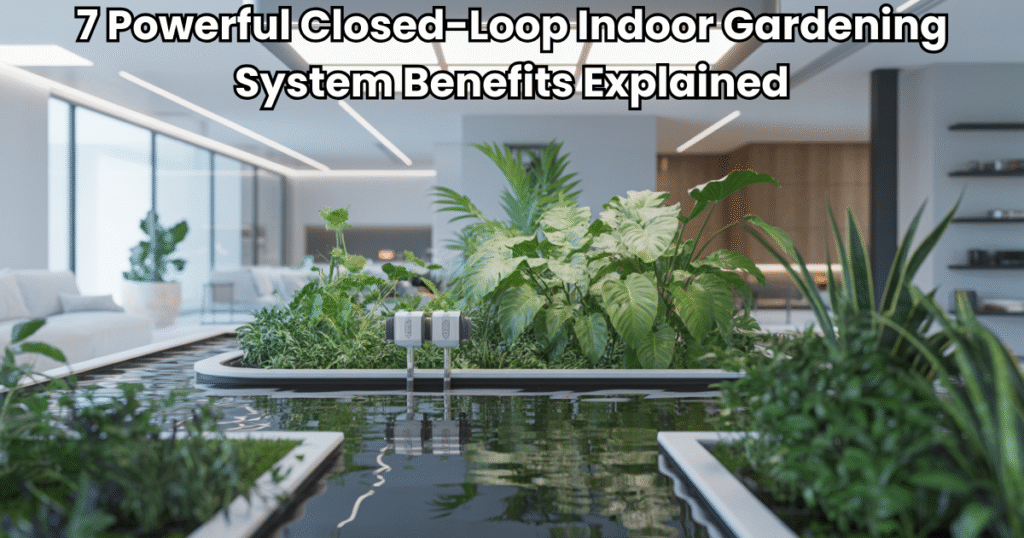
Compare AI vs sensor based irrigation controller accuracy, ROI, and real-world performance to choose the best smart irrigation solution.
- 🌿 What Are Irrigation Controllers and Why Accuracy Matters
- 🌿 How AI Irrigation Controllers Work
- 🌿 How Sensor-Based Irrigation Controllers Work
- 🌿 Accuracy Comparison – AI vs Sensor Based Irrigation Controllers
- 🌿 ROI Comparison – AI vs Sensor Based Irrigation Controllers
- 🌿 Real-World Performance in Different Environments
- 🌿 Installation, Maintenance, and Ease of Use
- 🌿 Pros and Cons of AI Irrigation Controllers
- 🌿 Pros and Cons of Sensor-Based Irrigation Controllers
- 🌿 Which Is Better – AI or Sensor Based Irrigation Controller?
- 🌿 Who Should Use AI vs Sensor Based Irrigation Controllers?
- ❓ Frequently Asked Questions (FAQ)
- 🌿 Conclusion: AI vs Sensor Based Irrigation Controller — Which One Should You Choose?
🌱 Introduction
Choosing the right irrigation controller can make the difference between a healthy garden and wasted water. Many gardeners invest in smart irrigation technology expecting better accuracy and savings, yet still struggle with over-watering or inconsistent results. This confusion often comes down to one key decision: AI vs sensor based irrigation controller.
At first glance, both options promise smarter watering. AI-based controllers rely on predictive data such as weather forecasts, historical patterns, and learning algorithms. Sensor-based controllers, on the other hand, respond directly to real-time soil moisture conditions. While both aim to improve efficiency, they work in very different ways—and those differences directly affect accuracy, return on investment, and real-world performance.
Understanding how these systems perform outside marketing claims is essential. A wrong choice can lead to higher costs, poor plant health, or disappointing water savings. A well-matched controller, however, can optimize irrigation, reduce waste, and pay for itself over time.
By the end of this post, you’ll clearly understand how AI vs sensor based irrigation controller solutions compare in terms of accuracy, ROI, and everyday performance—so you can confidently choose the smart irrigation approach that truly fits your garden’s needs.
🌿 What Are Irrigation Controllers and Why Accuracy Matters
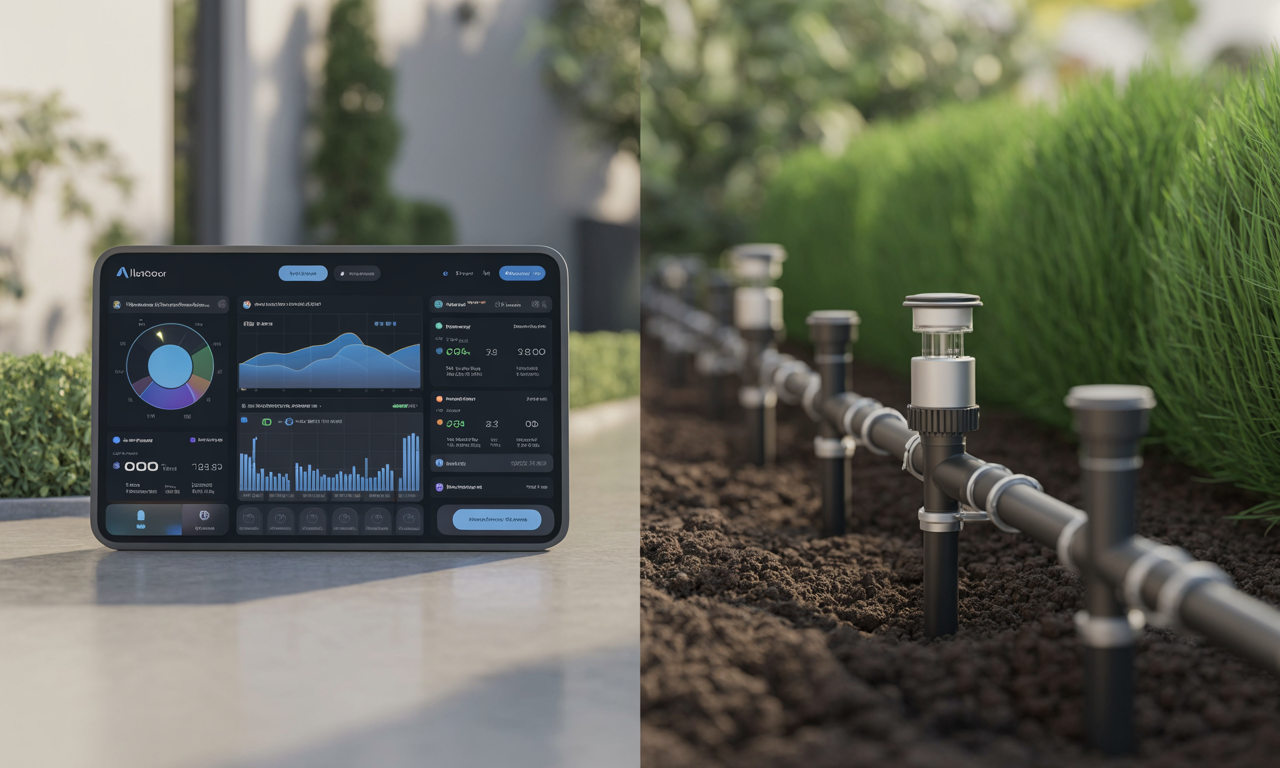
Irrigation controllers act as the brain of any watering system. Whether you choose an AI-driven model or a sensor-based setup, the controller decides when, how long, and how much to water. In the debate of AI vs sensor based irrigation controller, accuracy is the factor that determines success or failure.
🌱 Role of Controllers in Smart Irrigation Systems
The problem:
Traditional controllers follow fixed schedules. They water plants regardless of rain, soil condition, or temperature. This often leads to over-watering, shallow roots, and wasted water.
The explanation:
Smart irrigation controllers improve on this by using data to guide decisions. In an AI vs sensor based irrigation controller comparison, both approaches aim to increase accuracy—but they rely on different data sources to do so.
The solution:
Accurate controllers align irrigation with actual plant needs. AI-based systems predict water demand using weather and historical data, while sensor-based systems respond to real-time soil moisture conditions.
Pro tip:
The more accurately a controller understands plant water needs, the healthier the roots, soil, and overall garden will be.
Accuracy is the foundation of smart irrigation. Before comparing AI and sensor-based approaches in detail, it’s important to understand that every performance difference—water savings, ROI, and plant health—starts with how precisely the controller makes watering decisions.
🌿 How AI Irrigation Controllers Work
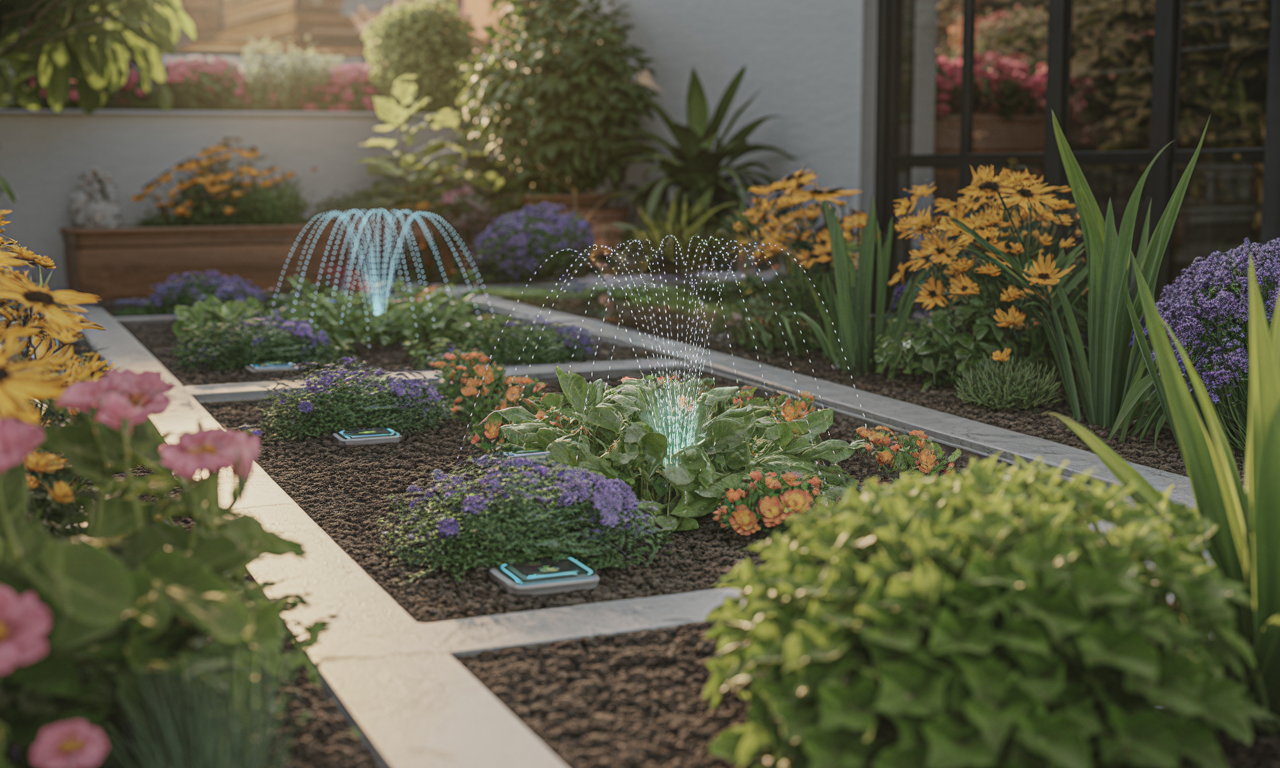
AI-based systems approach irrigation as a prediction problem. Instead of waiting for soil to dry or plants to show stress, they attempt to forecast water needs in advance. This predictive nature is what defines the AI side of the AI vs sensor based irrigation controller comparison.
🤖 Predictive Data and Machine Learning Logic
The problem:
Reactive watering often responds too late. By the time soil moisture drops or plants wilt, stress has already begun, reducing growth and efficiency.
The explanation:
AI irrigation controllers use predictive irrigation technology. They analyze multiple data sources such as local weather forecasts, temperature trends, humidity, rainfall probability, and historical watering outcomes. Machine learning models then identify patterns in how different conditions affect water demand.
The solution:
Based on these predictions, AI controllers adjust watering schedules proactively. If rain is expected, irrigation is reduced or skipped. During heatwaves, watering is increased carefully rather than flooding the soil.
Pro tip:
AI systems become more accurate over time as they learn from past weather patterns and irrigation results.
📊 Strengths of AI-Powered Irrigation Controllers
AI-based solutions excel in environments where weather plays a dominant role in water loss. They work particularly well for large lawns, open landscapes, and regions with predictable seasonal patterns.
Key advantages include:
- Forecast-driven watering decisions
- Reduced watering before rainfall
- Adaptive schedules without manual input
However, these strengths must be weighed carefully when comparing AI vs sensor based irrigation controller options, especially in areas with unpredictable microclimates.
AI irrigation controllers represent a forward-looking approach—anticipating plant needs rather than reacting to problems—making them a powerful option when predictive accuracy aligns with real-world conditions.
🌿 How Sensor-Based Irrigation Controllers Work
Sensor-based systems take a more direct approach to irrigation. Instead of predicting future conditions, they respond to what is happening in the soil right now. This real-time feedback model forms the foundation of the sensor side in the AI vs sensor based irrigation controller comparison.
📡 Soil Moisture and Real-Time Feedback
The problem:
Weather forecasts cannot account for micro-conditions such as shaded areas, uneven soil types, or drainage differences. This can cause inaccurate watering decisions.
The explanation:
Sensor-based irrigation controllers rely on soil moisture sensors placed at root depth. These sensors measure how much water is actually available to plants, providing immediate and localized feedback.
The solution:
When soil moisture drops below a set threshold, irrigation activates. When moisture is sufficient, watering stops—regardless of time schedules or forecasts. This ensures plants receive water only when they truly need it.
Pro tip:
Proper sensor placement is critical. Sensors must sit at active root zones to deliver accurate readings.
🌱 Strengths of Sensor-Based Irrigation Controllers
Sensor-based systems excel in environments where soil conditions vary across zones. They are especially effective in gardens with mixed plants, uneven sunlight, or variable drainage.
Key advantages include:
- Real-time watering decisions
- Accurate response to soil conditions
- Reduced risk of over-watering
In the AI vs sensor based irrigation controller debate, sensor-based systems offer precision rooted in reality—responding directly to plant conditions rather than relying on predictions.
🌿 Accuracy Comparison – AI vs Sensor Based Irrigation Controllers
Accuracy is the most important factor when comparing irrigation controllers. It directly affects water savings, plant health, and long-term performance. In the debate of AI vs sensor based irrigation controller, accuracy depends on how well each system interprets real-world conditions.
🎯 Weather Prediction vs Soil Reality
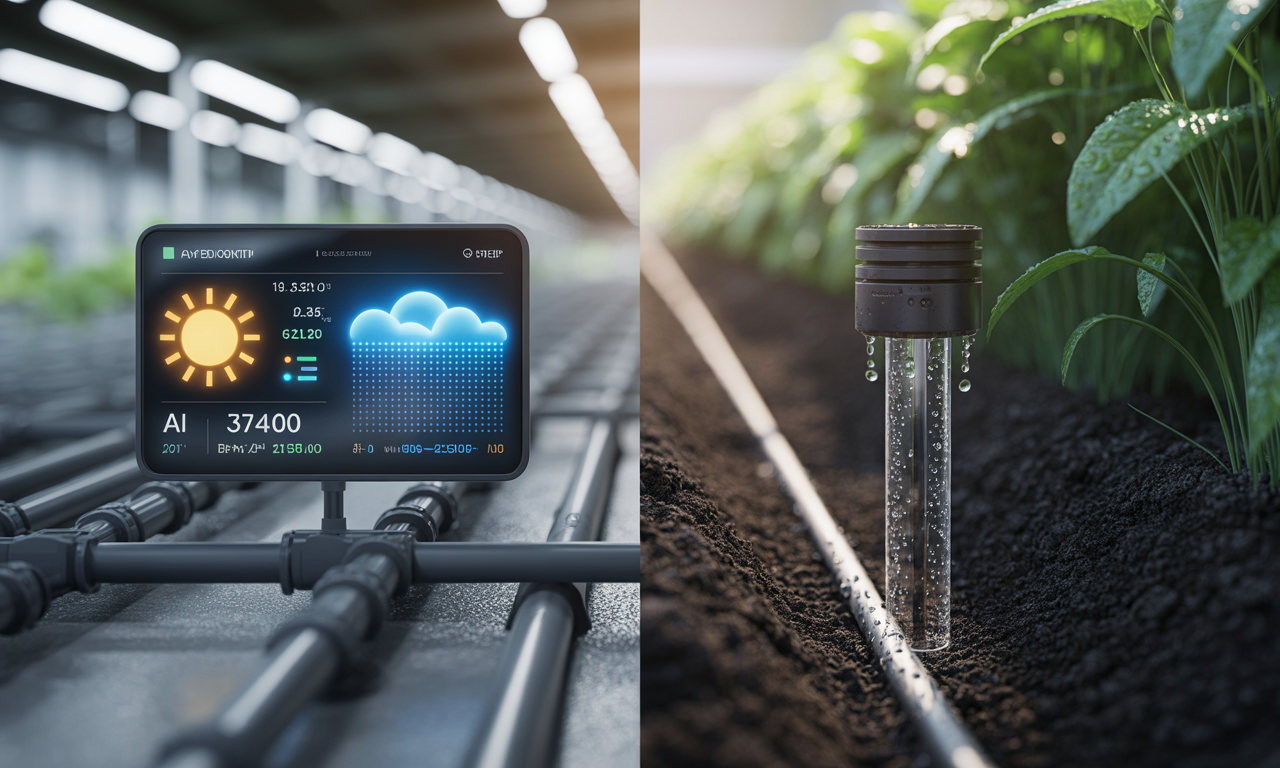
The problem:
No single data source can perfectly represent plant water needs. Weather forecasts can miss local variations, while soil sensors only react after conditions change.
The explanation:
AI controllers rely on predictive data. They estimate future water demand using weather forecasts, historical patterns, and climate trends. This allows proactive adjustments but may overlook microclimates such as shaded areas or uneven soil.
Sensor-based controllers depend on soil moisture readings. They measure actual water availability at the root zone, offering precise local accuracy. However, they react only after moisture levels change, not before.
The solution:
In real-world conditions, accuracy varies by environment:
- AI controllers perform better in open landscapes with consistent weather patterns.
- Sensor-based controllers excel in gardens with diverse soil types or irregular shading.
Pro tip:
Hybrid systems that combine weather prediction with soil sensor validation often deliver the highest accuracy.
📊 Accuracy Performance Summary
| Factor | AI Controllers | Sensor-Based Controllers |
| Data Source | Weather + historical data | Real-time soil moisture |
| Response Type | Predictive | Reactive |
| Microclimate Handling | Moderate | High |
| Consistency Across Zones | High | Zone-dependent |
When accuracy is the top priority, the AI vs sensor based irrigation controller decision should be guided by your garden’s layout, climate stability, and soil diversity rather than marketing claims.
🌿 ROI Comparison – AI vs Sensor Based Irrigation Controllers
Return on investment (ROI) is often the deciding factor when choosing between smart irrigation technologies. In the AI vs sensor based irrigation controller comparison, ROI depends on upfront cost, water savings, maintenance, and long-term performance.
💰 Initial Cost vs Long-Term Savings
The problem:
Many gardeners hesitate to invest in smart irrigation because advanced controllers appear expensive upfront. Without understanding long-term savings, it’s difficult to judge real value.
The explanation:
AI irrigation controllers typically cost more initially because they rely on software intelligence, cloud services, and weather data integration. Sensor-based controllers may be more affordable at first but require physical sensors that may need replacement or recalibration over time.
The solution:
ROI becomes clearer when water savings and plant health are considered:
- AI controllers reduce unnecessary watering before rainfall, lowering water bills steadily.
- Sensor-based controllers prevent over-watering by stopping irrigation when soil moisture is sufficient, minimizing waste at the root level.
Pro tip:
Regions with high water costs or restrictions often see faster ROI from smart irrigation investments.
📈 Payback Period and Cost Efficiency
The problem:
Short-term cost comparisons overlook how systems perform across seasons.
The explanation:
AI controllers show stronger ROI in climates with predictable weather patterns, where forecasting accuracy remains high. Sensor-based controllers deliver consistent savings in gardens with variable soil conditions and mixed plant zones.
The solution:
- AI-based systems often recover costs through reduced water use over large areas.
- Sensor-based systems deliver steady ROI by protecting plants from stress-related replacement costs.
Pro tip:
The fastest ROI often comes from systems matched precisely to local climate and soil conditions.
When evaluating ROI, the AI vs sensor based irrigation controller choice should balance upfront cost against long-term savings, reliability, and real-world performance rather than price alone.
🌿 Real-World Performance in Different Environments
Performance on paper does not always translate into real-life results. The true test of any smart irrigation solution lies in how it performs across different garden types and climates. In the AI vs sensor based irrigation controller comparison, real-world performance varies significantly depending on environment.
🌾 Lawns, Gardens, and Mixed Landscapes
The problem:
Many gardens include a mix of lawns, flower beds, shrubs, and vegetables. A single watering strategy rarely suits all zones equally.
The explanation:
AI irrigation controllers perform best in uniform landscapes such as large lawns or open gardens. Their predictive models efficiently manage watering where weather patterns are consistent across the area.
Sensor-based controllers shine in mixed landscapes. Because they rely on soil moisture readings, they adapt better to different plant needs, shaded zones, and uneven soil conditions.
The solution:
- AI controllers are ideal for broad, uniform areas.
- Sensor-based controllers deliver better results in diverse, segmented gardens.
Pro tip:
Zone-specific control significantly improves performance in complex garden layouts.
🌍 Performance in Water-Scarce and Variable Climates
The problem:
Regions with water restrictions or unpredictable weather demand precise irrigation decisions.
The explanation:
AI controllers help prevent watering before rainfall, which is valuable in areas with seasonal predictability. However, sudden weather changes can reduce forecast accuracy.
Sensor-based controllers respond immediately to soil conditions, making them more reliable in regions with unpredictable rainfall or varying soil moisture retention.
The solution:
- AI systems excel where climate patterns are stable.
- Sensor-based systems perform better where conditions change rapidly.
Pro tip:
In challenging climates, combining predictive data with soil sensors often delivers the most reliable real-world performance.
Understanding how each system behaves in real environments ensures that the AI vs sensor based irrigation controller decision aligns with your garden’s actual conditions rather than theoretical advantages.
🌿 Installation, Maintenance, and Ease of Use
Beyond accuracy and ROI, everyday usability plays a major role in long-term satisfaction. In the AI vs sensor based irrigation controller comparison, installation effort and ongoing maintenance can strongly influence which option performs better over time.
🔧 Installation Complexity and Setup Requirements
The problem:
Many gardeners abandon smart irrigation tools because setup feels complicated or time-consuming.
The explanation:
AI irrigation controllers are usually easier to install. Most connect directly to existing irrigation wiring and rely on software configuration through a mobile app. Once connected to the internet, they begin using weather and predictive data almost immediately.
Sensor-based irrigation controllers require additional physical setup. Soil moisture sensors must be placed correctly in the root zone, which may involve digging, wiring, or battery management. Incorrect placement can reduce accuracy.
The solution:
- AI controllers offer faster, cleaner installation.
- Sensor-based controllers require more effort but provide localized precision.
Pro tip:
If you prefer minimal physical setup, AI-based systems are usually more user-friendly.
🛠️ Ongoing Maintenance and Reliability
The problem:
Smart systems lose effectiveness if maintenance is ignored.
The explanation:
AI controllers require minimal physical maintenance. Updates are handled through software, and performance improves through learning rather than hardware changes.
Sensor-based controllers depend on sensor health. Sensors may need periodic recalibration, cleaning, or replacement, especially in harsh soil conditions.
The solution:
- AI systems offer low-maintenance, software-driven reliability.
- Sensor-based systems demand occasional hands-on attention for optimal performance.
Pro tip:
Maintenance effort should match your willingness to monitor and manage hardware components.
📱 Ease of Use and User Experience
The problem:
Complex interfaces discourage consistent use.
The explanation:
AI controllers often feature intuitive dashboards that summarize watering decisions and predicted savings. Sensor-based systems provide detailed soil data, which may feel overwhelming to beginners.
The solution:
- AI controllers suit users who want simplicity and automation.
- Sensor-based controllers suit users who prefer direct control and data transparency.
Ease of use is often the deciding factor in the AI vs sensor based irrigation controller decision. The best system is one you will use consistently and correctly over the long term.
🌿 Pros and Cons of AI Irrigation Controllers
AI-based systems offer a modern, predictive approach to watering, but they are not perfect for every situation. Understanding the strengths and limitations of AI solutions is essential in the AI vs sensor based irrigation controller comparison.
✅ Pros of AI Irrigation Controllers
The benefit:
AI controllers use predictive data to make smarter watering decisions before problems occur.
Key advantages include:
- Forecast-driven accuracy: Uses weather predictions to avoid watering before rain.
- Adaptive learning: Improves performance over time using historical data.
- Low hardware maintenance: No soil sensors to clean or replace.
- Easy setup: Typically installs quickly with app-based configuration.
- Scalable control: Handles large lawns and multiple zones efficiently.
Pro tip:
AI controllers perform best in regions with stable climate patterns and reliable weather forecasts.
⚠️ Cons of AI Irrigation Controllers
The limitation:
AI systems depend heavily on data quality and connectivity.
Common drawbacks include:
- Forecast dependency: Inaccurate weather data can affect decisions.
- Limited microclimate awareness: Shaded or uneven zones may not be fully represented.
- Internet reliance: Requires stable connectivity for real-time updates.
- Higher upfront cost: Advanced AI features can increase initial investment.
Pro tip:
AI controllers are less effective in gardens with highly variable soil conditions unless paired with sensors.
🌱 Best-Fit Users for AI Irrigation Controllers
AI-based solutions are ideal for:
- Large, uniform lawns
- Regions with predictable weather
- Users seeking low-maintenance automation
In the AI vs sensor based irrigation controller debate, AI controllers offer powerful predictive advantages—but only when environmental conditions align with forecast-driven accuracy.
🌿 Pros and Cons of Sensor-Based Irrigation Controllers
Sensor-based systems focus on real-time accuracy by responding directly to soil conditions. They offer a practical, ground-level approach to watering decisions, making them a strong contender in the AI vs sensor based irrigation controller comparison.
✅ Pros of Sensor-Based Irrigation Controllers
The benefit:
Sensor-based controllers make decisions based on actual soil moisture rather than predictions.
Key advantages include:
- Real-time accuracy: Waters plants only when soil moisture drops below required levels.
- Microclimate awareness: Handles shaded areas, uneven drainage, and varied soil types well.
- Reduced over-watering risk: Stops irrigation immediately when soil is sufficiently moist.
- Zone-specific control: Different sensors can manage different garden zones independently.
- High reliability in unpredictable weather: Performs consistently even when forecasts fail.
Pro tip:
Sensor-based systems deliver the best results when sensors are installed at the correct root depth.
⚠️ Cons of Sensor-Based Irrigation Controllers
The limitation:
Sensor-based systems depend on physical components that require care.
Common drawbacks include:
- Installation effort: Sensors must be placed accurately in the soil.
- Maintenance needs: Sensors may require recalibration, cleaning, or replacement.
- Reactive behavior: Responds after soil dries rather than predicting future needs.
- Higher complexity for beginners: Interpreting sensor data can feel technical.
Pro tip:
Poor sensor placement can reduce accuracy more than any software limitation.
🌱 Best-Fit Users for Sensor-Based Irrigation Controllers
Sensor-based solutions are ideal for:
- Gardens with mixed plant types
- Areas with variable soil and drainage
- Regions with unpredictable weather
- Users who prefer precision over prediction
In the AI vs sensor based irrigation controller comparison, sensor-based controllers offer unmatched local accuracy—especially where real-world conditions change faster than forecasts can predict.
🌿 Which Is Better – AI or Sensor Based Irrigation Controller?
There is no universal winner in the AI vs sensor based irrigation controller comparison. The better choice depends on accuracy needs, ROI expectations, and real-world garden conditions. Understanding how each system aligns with your goals helps you make a confident, long-term decision.
🧭 Decision Framework Based on Accuracy, ROI, and Use Case
The problem:
Marketing claims often suggest one technology is superior in all situations. This leads to mismatched purchases and disappointing results.
The explanation:
AI and sensor-based controllers solve different problems:
- AI controllers excel at prediction and large-scale efficiency.
- Sensor-based controllers focus on localized accuracy and immediate feedback.
Each approach delivers strong performance—but only in the right context.
The solution:
Use this practical decision guide:
| Scenario | Better Choice |
| Large, uniform lawns | AI irrigation controller |
| Mixed gardens with varied soil | Sensor-based controller |
| Predictable seasonal climate | AI irrigation controller |
| Unpredictable weather patterns | Sensor-based controller |
| Low-maintenance preference | AI irrigation controller |
| Precision-focused watering | Sensor-based controller |
Pro tip:
If budget allows, hybrid systems that combine AI prediction with soil sensors often provide the best of both worlds.
⚖️ Accuracy vs ROI Trade-Offs
The problem:
Higher accuracy does not always guarantee higher ROI.
The explanation:
AI systems may deliver faster ROI in regions with high water costs and stable climates. Sensor-based systems provide consistent accuracy that protects plants and reduces replacement costs, which also contributes to ROI.
The solution:
Choose the system that aligns with your dominant priority:
- Cost efficiency and automation: AI-based
- Precision and plant health: Sensor-based
In the AI vs sensor based irrigation controller debate, the “better” option is the one that matches your environment, expectations, and willingness to manage hardware or software—not the one with the boldest claims.
🌿 Who Should Use AI vs Sensor Based Irrigation Controllers?
Choosing between an AI-driven or sensor-based option becomes much easier when you match each system to the right user profile. In the AI vs sensor based irrigation controller comparison, performance improves significantly when the technology aligns with real needs and conditions.
🏡 Home Gardeners and Lawns
If you manage a standard home lawn with relatively uniform soil and sunlight, AI irrigation controllers often deliver better convenience. Their predictive schedules reduce daily involvement while maintaining consistent watering.
🌼 Mixed Gardens and Landscapes
Gardens with flowers, vegetables, shrubs, and shaded areas benefit more from sensor-based irrigation controllers. Real-time soil moisture data ensures each zone receives water only when required.
🌍 Water-Scarce or Restriction-Prone Regions
In areas facing water shortages or strict watering rules, sensor-based controllers offer greater reliability. They respond immediately to soil conditions, preventing waste even when weather patterns are unpredictable.
⏳ Busy Homeowners
Users who prefer a hands-off approach typically favor AI controllers. Once configured, they require minimal maintenance and adjust watering automatically using predictive data.
🔧 Tech-Savvy and Precision-Focused Users
Gardeners who enjoy data, fine-tuning, and hands-on optimization often prefer sensor-based systems. These provide detailed insights into soil behavior and plant needs.
Pro tip:
If your garden includes both large lawns and delicate planting zones, consider hybrid solutions that combine AI prediction with soil sensors for balanced performance.
By matching technology to user needs, the AI vs sensor based irrigation controller decision becomes practical rather than confusing—ensuring better accuracy, ROI, and long-term satisfaction.
❓ Frequently Asked Questions (FAQ)
1. What is the main difference between AI and sensor based irrigation controllers?
The main difference in an AI vs sensor based irrigation controller lies in how decisions are made. AI controllers rely on predictive data such as weather forecasts and historical patterns, while sensor-based controllers respond directly to real-time soil moisture conditions.
2. Which is more accurate: AI or sensor based irrigation controller?
Accuracy depends on the environment. In the AI vs sensor based irrigation controller comparison, AI systems perform well in uniform landscapes with predictable weather, while sensor-based systems are more accurate in gardens with mixed soil types and microclimates.
3. Do AI irrigation controllers really save more water?
AI controllers save water by avoiding irrigation before rain and adjusting schedules based on forecasts. However, in the AI vs sensor based irrigation controller debate, sensor-based systems may save more water in unpredictable conditions by reacting instantly to soil moisture.
4. Are sensor based irrigation controllers reliable long term?
Yes, sensor-based controllers are reliable when sensors are installed correctly and maintained. In the AI vs sensor based irrigation controller comparison, sensor systems remain dependable even when weather data is inaccurate.
5. Which irrigation controller offers better ROI?
ROI varies by use case. AI systems often deliver faster ROI for large lawns and predictable climates, while sensor-based systems provide steady ROI by preventing plant stress and replacement costs. The best ROI in the AI vs sensor based irrigation controller choice depends on local conditions.
6. Can AI and sensor based irrigation controllers work together?
Yes. Hybrid systems combine predictive AI scheduling with soil sensor validation. In many real-world scenarios, this hybrid approach offers the best balance in the AI vs sensor based irrigation controller comparison.
7. Are AI irrigation controllers harder to use than sensor based ones?
AI controllers are usually easier to use because they rely on automation and software dashboards. Sensor-based systems may feel more technical but offer greater precision. Ease of use is a key consideration in the AI vs sensor based irrigation controller decision.
8. Which system is better for beginners?
Beginners often find AI systems easier due to minimal setup and automation. However, beginners with small gardens can also succeed with sensor-based systems if properly guided. The best choice in the AI vs sensor based irrigation controller debate depends on comfort with technology.
🌿 Conclusion: AI vs Sensor Based Irrigation Controller — Which One Should You Choose?
Choosing between AI and sensor-based irrigation is not about which technology sounds more advanced—it’s about which one fits your garden’s reality. In the AI vs sensor based irrigation controller comparison, both systems deliver real value, but in very different ways.
AI irrigation controllers excel at prediction, automation, and convenience. They work best in large or uniform landscapes where weather patterns are stable and water savings scale quickly. Sensor-based irrigation controllers, on the other hand, shine in precision. By responding directly to soil moisture, they adapt better to mixed gardens, uneven drainage, and unpredictable weather.
When accuracy is the top priority, sensor-based systems often have the edge. When ROI and low maintenance matter most, AI systems may deliver faster returns. For many gardeners, the ideal solution lies in hybrid systems that combine AI-driven forecasts with real-time soil sensor validation.
Ultimately, the best choice is the one aligned with your climate, garden layout, budget, and involvement level. By understanding the real differences in accuracy, ROI, and performance, you can move beyond marketing claims and invest confidently in the irrigation controller that truly supports smarter, more efficient watering.
💬 Your Turn
Which approach do you think suits your garden better—AI vs sensor based irrigation controller? Have you used either system before? Share your experience or questions in the comments and help others make smarter irrigation decisions 🌱
💡Looking for something different? Check out our latest post here: https://gardeniva.com/click-grow-vs-aerogarden/