
Learn how automated fertigation using soil sensors applies nutrients precisely using real-time soil data for healthier plants and less fertilizer waste.
- 🌿 What Is Automated Fertigation Using Soil Sensors?
- 🌿 How Real-Time Soil Sensor Data Powers Fertigation
- 🌿 Key Sensors Used in Smart Fertigation Systems
- 🌿 How Automated Fertigation Systems Work Step by Step
- 🌿 Benefits of Automated Fertigation Using Soil Sensors
- 🌿 Common Mistakes in Sensor-Based Fertigation
- 🌿 Is Automated Fertigation Using Soil Sensors Worth It?
- ❓ Frequently Asked Questions (FAQ)
- 🌿 Conclusion: Is Automated Fertigation Using Soil Sensors the Right Choice for Home Gardens?
🌱 Introduction
Feeding plants correctly is one of the most misunderstood parts of home gardening. Many gardeners apply fertilizers on fixed schedules, hoping plants will absorb nutrients evenly. In reality, soil conditions change every day due to watering, weather, and plant uptake. When nutrients are applied without understanding these changes, the result is often nutrient burn, wastage, or poor growth. This is where automated fertigation using soil sensors offers a smarter approach.
Instead of relying on guesswork, soil sensors provide real-time insight into what is happening in the root zone. They measure critical factors such as soil moisture and nutrient concentration, helping gardeners understand when plants can actually absorb nutrients. By linking this data to automation, fertigation becomes responsive rather than routine.
With automated fertigation using soil sensors, nutrients are delivered only when soil conditions are optimal. This improves nutrient efficiency, reduces fertilizer loss, and supports healthier root development. Automation does not remove control from the gardener—it enhances decision-making by replacing assumptions with data.
By the end of this guide, you will clearly understand how automated fertigation using soil sensors works, how real-time soil data drives nutrient decisions, and how home gardeners can apply this method safely to achieve consistent, healthy plant growth.
🌿 What Is Automated Fertigation Using Soil Sensors?
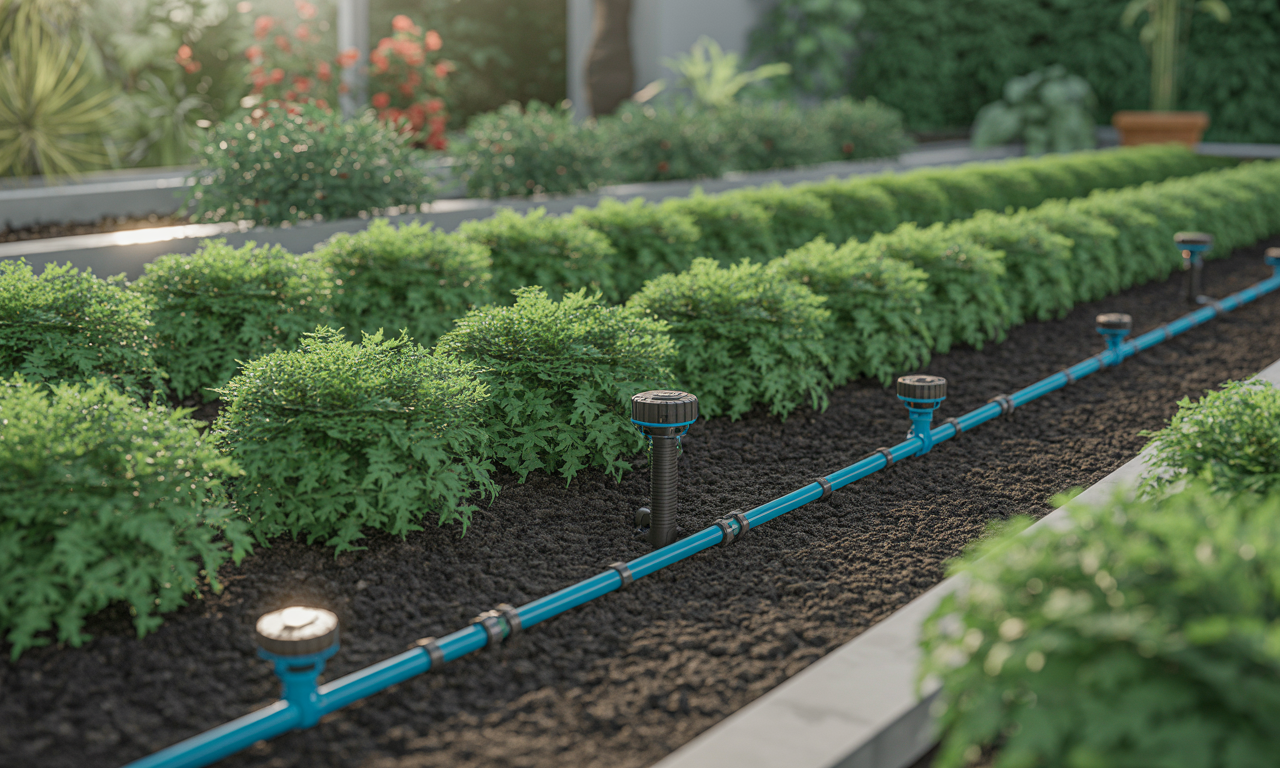
Automated fertigation using soil sensors is a data-driven method of delivering nutrients through irrigation water based on real-time soil conditions. Instead of following fixed fertilizing schedules, this approach adjusts nutrient delivery according to what plants actually need at a given moment.
🌱 Why Manual Fertilization Fails in Home Gardens
The problem:
Most home gardeners fertilize on a weekly or monthly routine. These schedules ignore daily changes in soil moisture, nutrient availability, and plant uptake.
The explanation:
Soil is a dynamic system. Rainfall, irrigation, evaporation, and microbial activity constantly alter nutrient concentration in the root zone. When fertilizer is applied without soil feedback, nutrients may accumulate excessively or leach away before plants can absorb them.
The solution:
With automated fertigation using soil sensors, nutrient delivery responds directly to soil data. Sensors detect whether moisture levels allow absorption and whether nutrient concentration is within a safe range before fertigation begins.
Pro tip:
Fewer, well-timed nutrient applications guided by soil data are far more effective than frequent manual feeding.
By aligning nutrient delivery with real soil conditions, automated fertigation using soil sensors transforms fertilization from a guessing game into a precise, plant-focused process that supports consistent and healthy growth.
🌿 How Real-Time Soil Sensor Data Powers Fertigation
At the heart of automated fertigation using soil sensors lies real-time soil data. Without accurate, continuous feedback from the root zone, automation would simply repeat the same mistakes as manual fertilization—only faster. Soil sensors ensure that every fertigation decision is based on actual conditions rather than assumptions.
📊 Understanding Moisture, EC, and Nutrient Signals
The problem:
Many gardeners fertilize when plants look weak, without knowing whether the soil can support nutrient uptake at that moment. Applying nutrients to dry soil or already nutrient-rich soil often causes stress instead of recovery.
The explanation:
Real-time soil sensors measure two critical parameters that directly affect fertigation outcomes:
- Soil moisture, which determines whether roots can absorb dissolved nutrients
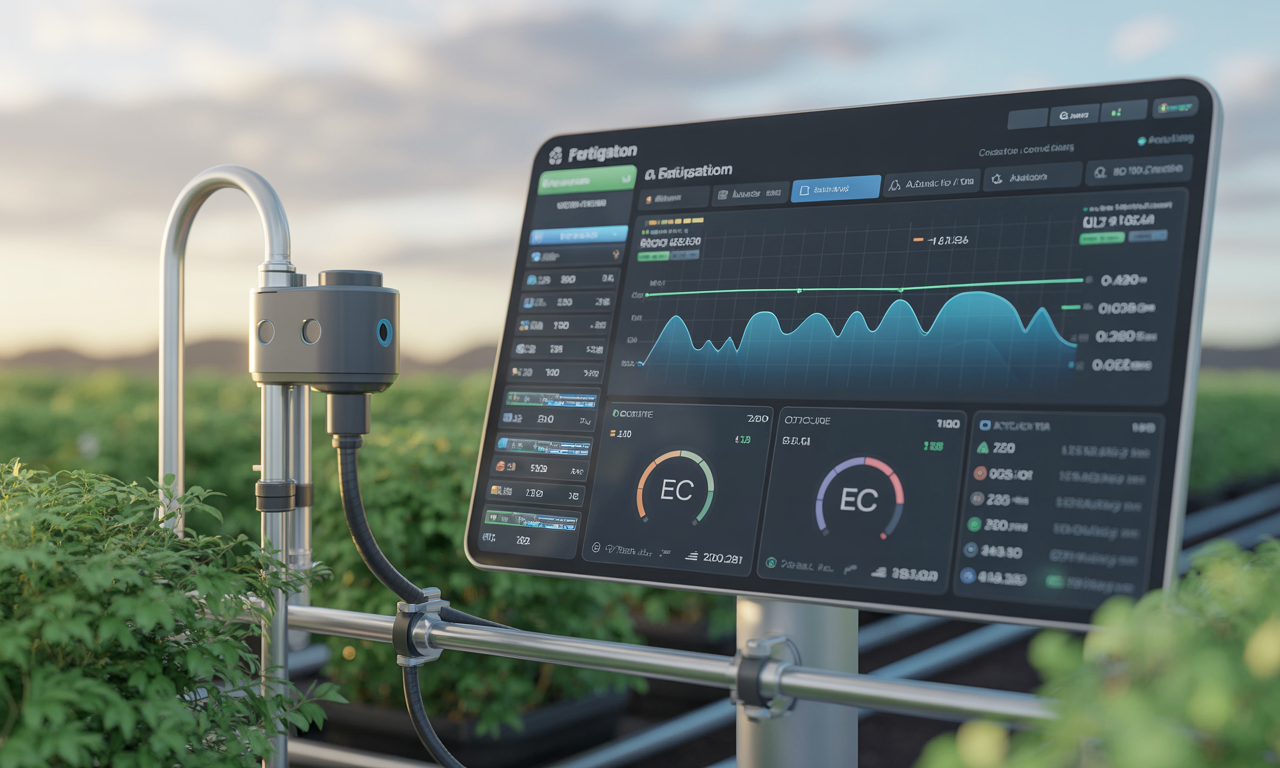
- Electrical conductivity (EC), which reflects the concentration of nutrients and salts in the soil solution
High EC indicates that nutrients are already present, while low EC may signal depletion. However, EC alone is not enough. If moisture levels are too low, nutrients cannot move toward roots effectively.
The solution:
With automated fertigation using soil sensors, fertigation occurs only when both moisture and EC conditions align. The system verifies that soil is sufficiently moist and nutrient levels are within a safe range before injecting fertilizers into irrigation water. This coordination prevents nutrient burn, reduces leaching, and improves uptake efficiency.
Pro tip:
Always interpret EC and moisture together. A moderate EC level is beneficial only when soil moisture allows nutrients to remain mobile and accessible.
By relying on continuous feedback rather than periodic checks, automated fertigation using soil sensors transforms nutrient delivery into a responsive process. Instead of reacting to plant stress after damage occurs, gardeners can maintain stable soil conditions that support steady, healthy growth over time.
🌿 Key Sensors Used in Smart Fertigation Systems
Effective automated fertigation using soil sensors depends on choosing the right combination of sensors. Each sensor measures a different aspect of the root environment, and together they create the context needed for accurate nutrient delivery. Relying on a single sensor often leads to partial decisions and inconsistent results.
🧪 Soil Moisture, EC, and Temperature Sensors Explained
The problem:
Many home gardens use only soil moisture sensors. While moisture is important, it does not reveal whether nutrients are present, depleted, or concentrated to unsafe levels.
The explanation:
Smart fertigation systems typically use three core sensor types:
- Soil moisture sensors indicate how much water is available for nutrient transport.
- Soil EC sensors measure dissolved nutrient and salt concentration in the root zone.
- Soil temperature sensors influence root activity and nutrient uptake efficiency.
Each parameter affects how plants absorb nutrients. For example, nutrients applied to cold soil may remain unused, while nutrients added to dry soil may concentrate and damage roots.
The solution:
In automated fertigation using soil sensors, these readings work together. Fertigation is enabled only when moisture supports uptake, EC indicates a nutrient need, and temperature conditions are favorable for root absorption. This multi-sensor approach prevents unnecessary feeding and improves consistency.
Pro tip:
Correct sensor placement at active root depth is more important than adding extra sensors. Poor placement can distort data and reduce the effectiveness of automated fertigation using soil sensors.
🌿 How Automated Fertigation Systems Work Step by Step
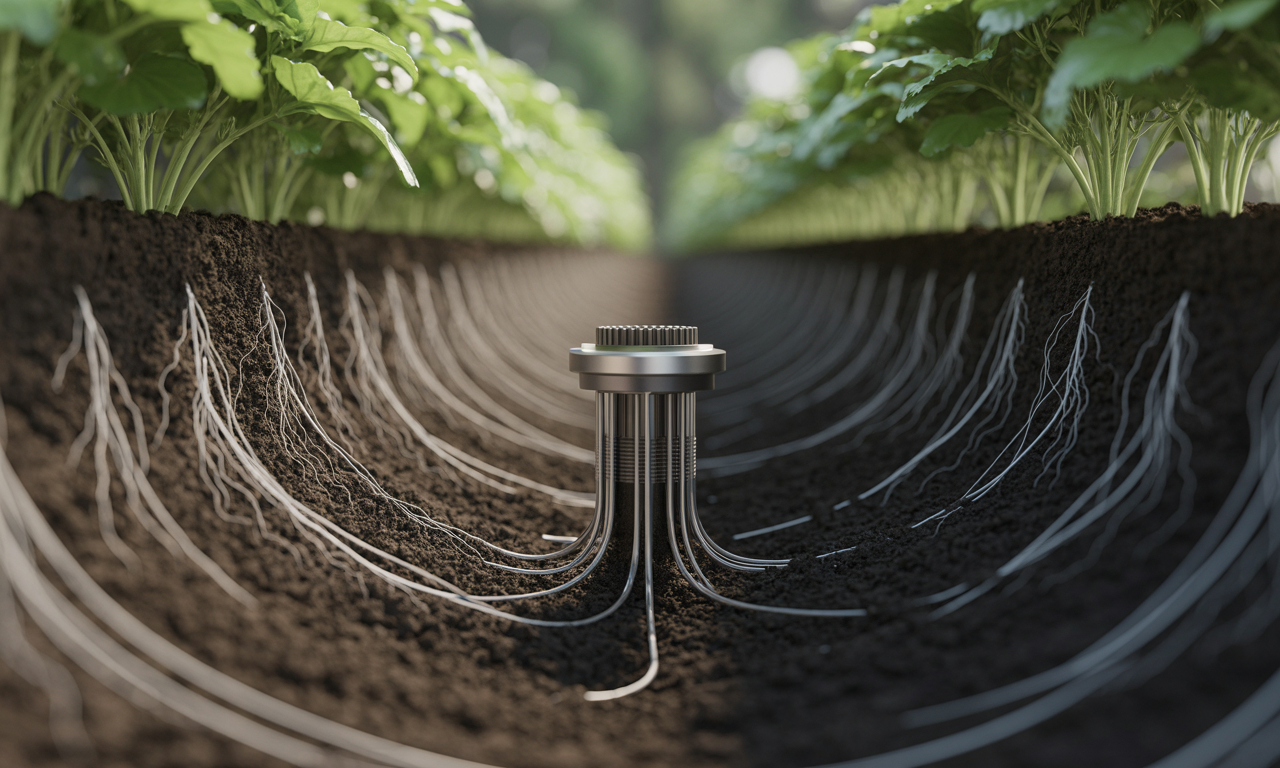
Understanding the workflow behind automated fertigation using soil sensors helps gardeners trust automation while staying in control. Instead of blindly injecting nutrients, a smart fertigation system follows a clear, logical sequence based on soil data.
🔄 From Soil Data to Nutrient Dosing
The problem:
Manual feeding decisions are often delayed or inconsistent. By the time visual symptoms appear, plants may already be stressed, and corrective feeding becomes reactive rather than preventive.
The explanation:
In an automated setup, soil sensors continuously collect real-time data from the root zone. Moisture, EC, and temperature readings are sent to a central controller or smart hub. The system compares these values with preset thresholds that match plant type and growth stage.
The solution:
When soil conditions meet feeding criteria, automated fertigation using soil sensors activates nutrient injection into the irrigation line. If soil moisture is too low, EC is already high, or temperature limits uptake, fertigation pauses automatically. This closed-loop process ensures nutrients are applied only when plants can use them efficiently.
Pro tip:
Begin with conservative nutrient thresholds and adjust gradually based on plant response rather than chasing rapid growth.
By following this step-by-step logic, automated fertigation using soil sensors replaces guesswork with controlled, repeatable nutrient delivery—supporting stable plant health and long-term soil balance.
🌿 Benefits of Automated Fertigation Using Soil Sensors
When implemented correctly, automated fertigation using soil sensors delivers far more than convenience. It creates a balanced nutrient environment that supports plant health, soil stability, and long-term efficiency in home gardens.
🌱 Why Sensor-Driven Fertigation Improves Results
The problem:
Traditional fertilization often results in uneven feeding. Some plants receive excess nutrients, while others remain underfed. This imbalance leads to wasted fertilizer, stressed roots, and inconsistent growth.
The explanation:
Plants absorb nutrients only when soil moisture, nutrient concentration, and root activity align. Manual feeding cannot account for these constantly changing conditions. In contrast, automated fertigation using soil sensors adjusts nutrient delivery in real time based on what the soil actually needs.
The solution:
By synchronizing nutrient dosing with soil conditions, automated fertigation provides several key benefits:
- Prevents nutrient burn caused by excess fertilizer
- Improves nutrient uptake efficiency at the root level
- Reduces fertilizer runoff and salt buildup
- Maintains consistent nutrient availability throughout growth stages
- Saves time by eliminating frequent manual feeding
Pro tip:
Many gardeners notice healthier foliage and stronger root systems within weeks of switching to automated fertigation using soil sensors—without increasing fertilizer quantity.
By delivering nutrients precisely and consistently, automated fertigation using soil sensors supports steady plant growth while protecting both soil health and gardening budgets.
🌿 Common Mistakes in Sensor-Based Fertigation
While automated fertigation using soil sensors offers precision and efficiency, mistakes in setup or interpretation can reduce its benefits. Understanding these common errors helps gardeners avoid setbacks and get the most from automation.
⚠️ Misinterpreting Soil Data and Over-Automation
The problem:
Some gardeners react to every change in sensor readings. A small rise in EC or a brief drop in moisture often triggers immediate adjustments, which can destabilize soil conditions.
The explanation:
Soil data naturally fluctuates throughout the day. Temperature shifts, irrigation cycles, and plant activity all influence readings. Treating every fluctuation as a problem leads to overfeeding, nutrient swings, and unnecessary stress on plants.
The solution:
With automated fertigation using soil sensors, decisions should be based on trends rather than isolated numbers. Establish baseline values for moisture and EC, then adjust fertigation only when consistent patterns appear over several days.
Pro tip:
Change one variable at a time. This makes it easier to understand how plants respond and prevents cascading errors.
⚠️ Poor Sensor Placement and Calibration
The problem:
Incorrect sensor placement delivers misleading data, even with high-quality equipment.
The explanation:
Sensors placed too shallow, too deep, or outside the active root zone fail to represent true soil conditions. Inaccurate calibration further compounds errors, causing incorrect fertigation decisions.
The solution:
For effective automated fertigation using soil sensors, place sensors at root depth where nutrient uptake occurs. Recalibrate sensors periodically to maintain accuracy.
Pro tip:
Reliable data matters more than frequent data. A well-placed, calibrated sensor outperforms multiple poorly installed ones.
By avoiding these common mistakes, automated fertigation using soil sensors becomes a dependable system that supports consistent plant nutrition without unnecessary intervention.
🥬 Vegetable Gardens
The challenge:
Vegetable plants have changing nutrient needs as they move from leaf growth to flowering and fruiting. Manual fertilization often fails to match these shifts.
How automation helps:
With automated fertigation using soil sensors, nutrient delivery adjusts based on real-time soil EC and moisture. This ensures vegetables receive consistent nutrition without overfeeding during sensitive stages.
Result:
More uniform growth, healthier leaves, and improved yields without increasing fertilizer use.
🪴 Container Plants
The challenge:
Containers dry out quickly and are prone to salt buildup from repeated fertilization.
How automation helps:
Soil sensors detect moisture loss and rising EC levels early. Automated fertigation pauses feeding when nutrient concentration becomes too high and resumes only when conditions stabilize.
Result:
Reduced root stress, fewer leaf burn issues, and longer soil usability.
🌱 Raised Beds
The challenge:
Raised beds drain faster than in-ground soil, making nutrient retention inconsistent.
How automation helps:
Automated fertigation using soil sensors synchronizes feeding with moisture availability, preventing nutrients from flushing out before plants can absorb them.
Result:
Better nutrient efficiency and more predictable plant performance.
🏠 Indoor and Balcony Gardens
The challenge:
Indoor and balcony gardens depend entirely on the gardener for water and nutrients.
How automation helps:
Soil sensors provide continuous feedback, allowing automated fertigation systems to deliver small, precise nutrient doses at the right time.
Result:
Stable growth, reduced maintenance, and healthier plants in limited spaces.
By adapting to different garden environments, automated fertigation using soil sensors proves that precision feeding is not just for large operations—it is practical, scalable, and highly effective for everyday home gardening.
🌿 Is Automated Fertigation Using Soil Sensors Worth It?
For many home gardeners, automation sounds complex or unnecessary. The real question is not whether automation is advanced, but whether automated fertigation using soil sensors genuinely improves results compared to manual feeding. The answer depends on garden size, plant type, and consistency of care.
⚖️ When Automated Fertigation Makes Sense
The problem:
Manual fertilization becomes unreliable when gardens grow larger or more diverse. Different plants, containers, and soil conditions require different nutrient strategies, which are hard to manage consistently by hand.
The explanation:
In these situations, soil conditions change faster than a gardener can respond. Missed feedings, overfeeding, or uneven nutrient distribution become common. Automated fertigation using soil sensors solves this by responding instantly to real-time soil data instead of waiting for visual symptoms.
The solution:
Automation is especially worthwhile when:
- You manage multiple beds, containers, or plant types
- Nutrient demand changes frequently during the growing season
- You want consistent results with less daily monitoring
- You aim to reduce fertilizer waste and runoff
Pro tip:
Automation delivers the highest value when it replaces inconsistency, not when it replaces simple, effective routines.
⚠️ When Automation May Not Be Necessary
The problem:
Some gardeners overengineer small or low-maintenance setups.
The explanation:
If you manage a very small garden with stable soil and minimal feeding needs, full automation may offer limited additional benefit. In such cases, soil sensors alone may provide enough insight without automatic dosing.
The solution:
Start with monitoring first. Use soil sensors to understand moisture and EC patterns. Add automation only when manual feeding becomes inefficient or inconsistent.
Pro tip:
The best approach to automated fertigation using soil sensors is gradual adoption—observe, understand, then automate.
By weighing garden complexity against management effort, gardeners can decide whether automated fertigation using soil sensors is a smart upgrade or simply an optional enhancement.
❓ Frequently Asked Questions (FAQ)
1. What is automated fertigation using soil sensors?
Automated fertigation using soil sensors is a system that delivers plant nutrients through irrigation water based on real-time soil data. Instead of fertilizing on a fixed schedule, nutrients are applied only when soil moisture and nutrient levels indicate a genuine need.
2. How do soil sensors improve fertigation accuracy?
Soil sensors measure key parameters such as moisture and electrical conductivity (EC). In automated fertigation using soil sensors, these readings ensure nutrients are supplied only when roots can absorb them efficiently, reducing waste and preventing nutrient burn.
3. Is automated fertigation suitable for home gardens?
Yes. When scaled properly, automated fertigation using soil sensors works well in home gardens, including vegetable beds, containers, raised beds, and even indoor or balcony gardens.
4. Can automated fertigation prevent over-fertilization?
Yes. By tracking EC levels in real time, automated fertigation using soil sensors helps detect nutrient buildup early and pauses feeding before fertilizer concentrations become harmful.
5. Do soil sensors need frequent calibration?
Most soil sensors require calibration every few months. Regular calibration ensures that automated fertigation using soil sensors continues to deliver accurate and reliable data for nutrient decisions.
6. Does automated fertigation replace manual monitoring completely?
No. While automated fertigation using soil sensors reduces manual effort, occasional visual checks and data review are still important to confirm plant health and system performance.
7. Is automated fertigation expensive to set up?
Costs vary depending on sensor quality and system complexity. However, many home gardeners find that automated fertigation using soil sensors saves money over time by reducing fertilizer waste and plant losses.
8. Can beginners use automated fertigation systems safely?
Yes. Beginners can start with soil monitoring first, then gradually introduce automation. This step-by-step approach makes automated fertigation using soil sensors both safe and easy to manage.
🌿 Conclusion: Is Automated Fertigation Using Soil Sensors the Right Choice for Home Gardens?
Healthy plant growth depends on balance, timing, and consistency. Feeding plants too early, too late, or in excess often causes more harm than good. Automated fertigation using soil sensors addresses this challenge by aligning nutrient delivery with real soil conditions instead of fixed schedules or visual guesswork.
Throughout this guide, you’ve seen how real-time soil data—especially moisture and EC—guides smarter fertigation decisions. By responding only when plants can actually absorb nutrients, automated systems reduce fertilizer waste, prevent nutrient burn, and support steady growth across different garden setups. This approach replaces uncertainty with clarity and transforms fertilization into a controlled, repeatable process.
The true strength of automated fertigation using soil sensors lies in its flexibility. Home gardeners can start small by monitoring soil conditions, then gradually introduce automation as their garden grows or becomes more complex. When applied thoughtfully, automation simplifies care rather than complicating it.
As home gardening moves toward precision, sustainability, and efficiency, sensor-driven fertigation is no longer a future concept—it is a practical solution available today. For gardeners seeking healthier plants, better nutrient efficiency, and consistent results, automated fertigation using soil sensors offers a reliable path forward.
💬 Your Turn
Would you start by monitoring soil data first, or are you ready to automate fertigation in your home garden? Share your thoughts or experiences in the comments—your insight could help others grow smarter 🌱
💡Looking for something different? Check out our latest post here: https://gardeniva.com/smart-planters-with-cloud-analytics/