
Discover how an AI indoor gardening system uses machine learning to automate light, water, and nutrients for healthier indoor plants.
- 🌿 What Is an AI Indoor Gardening System?
- 🌿 How Machine Learning Powers Smart Indoor Grow Systems
- 🌿 How an AI Indoor Gardening System Controls Water Efficiently
- 🌿 How an AI Indoor Gardening System Optimizes Nutrient Delivery
- 🌿 Benefits of Using an AI Indoor Gardening System
- 🌿 Limitations and Challenges of an AI Indoor Gardening System
- 🌿 How to Choose the Best AI Indoor Gardening System with Automation
- 🌿 Smart Indoor Garden System Review Criteria (Expert Evaluation Framework)
- 🌿 Who Should Use an AI Indoor Gardening System?
- ❓ Frequently Asked Questions (FAQ)
- 🌿 Conclusion: Is an AI Indoor Gardening System Worth It?
🌱 Introduction
Have you ever wondered why some indoor plants flourish with ease while others fail despite regular care? The difference often comes down to precision. An ai indoor gardening system is redefining indoor plant care by replacing guesswork with data-driven decisions that plants can actually respond to.
In traditional indoor gardening, lighting schedules are fixed, watering is manual, and nutrients are added based on assumptions. These methods frequently lead to overwatering, nutrient stress, or slow growth. An ai indoor gardening system, however, continuously learns from plant behavior using sensors and machine learning. It adjusts light intensity, watering frequency, and nutrient delivery based on real conditions rather than preset rules.
This intelligent approach creates a stable growing environment where plants receive exactly what they need, when they need it. As a result, plant stress is reduced, growth becomes more consistent, and maintenance time drops significantly. Even beginners can achieve reliable results without deep gardening knowledge.
With the rise of smart homes and indoor food production, the ai indoor gardening system is becoming a cornerstone of indoor farming automation. By the end of this guide, you’ll understand how this technology optimizes light, water, and nutrients—and why it represents the future of smart indoor plant management.
🌿 What Is an AI Indoor Gardening System?
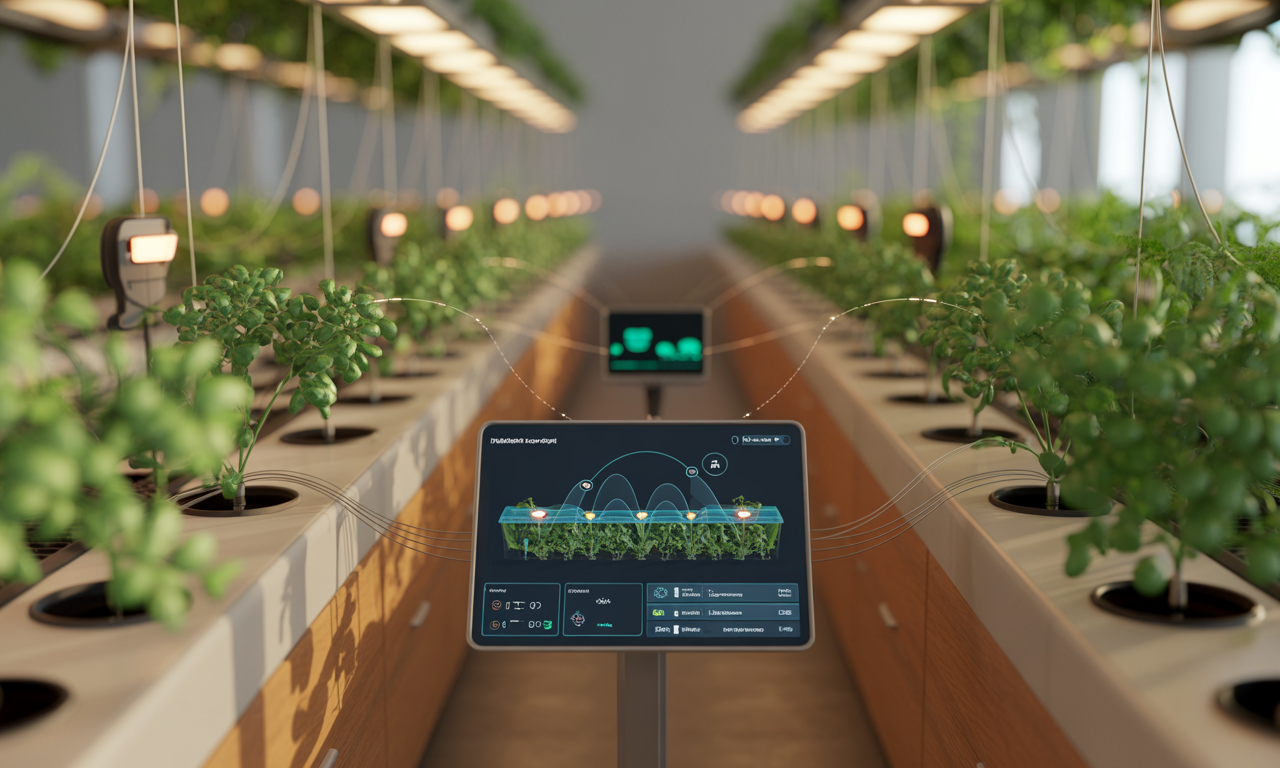
An ai indoor gardening system is an intelligent plant-growing setup that uses artificial intelligence, sensors, and automation to manage indoor plants with minimal human effort. Instead of relying on fixed schedules or manual judgment, this system continuously observes plant conditions and adapts its actions in real time.
At its core, an ai indoor gardening system combines three elements: data collection, machine learning, and automated control. Sensors track critical factors such as light intensity, soil or root-zone moisture, temperature, humidity, and nutrient levels. This data is then processed by machine-learning algorithms that identify patterns in plant behavior and environmental changes.
From Manual Care to Autonomous Indoor Plant Systems
The problem:
Traditional indoor gardening depends on human routines. Watering is often done too early or too late, lighting remains constant even when plants need change, and nutrient feeding follows guesswork. Over time, these inconsistencies stress plants and limit growth.
The explanation:
An ai indoor gardening system removes this limitation by learning how plants respond to their environment. Instead of asking the gardener to make decisions, the system evaluates real-time data and predicts what action will support optimal growth.
The solution:
Through automation, the system adjusts lighting cycles, watering frequency, and nutrient delivery without manual input. This creates an autonomous indoor plant system that reacts instantly to plant needs rather than waiting for human correction.
Pro tip:
Many basic “smart” systems rely on preset rules. True AI-based systems continuously improve decisions over time, making them far more effective than timer-based automation.
In simple terms, an ai indoor gardening system acts like a digital gardener—observing, learning, and responding—so plants grow in a stable, optimized indoor environment.
🌿 How Machine Learning Powers Smart Indoor Grow Systems
Machine learning is the brain behind every advanced ai indoor gardening system. It allows the system to move beyond fixed rules and make decisions based on patterns, predictions, and continuous learning. This is what separates true intelligent gardening from basic automation.
📊 Data Collection Through Sensor-Based Indoor Gardening
The problem:
Indoor plants live in constantly changing conditions. Light shifts throughout the day, room temperature fluctuates, and moisture levels change faster than most people realize. Manual observation cannot track these changes accurately.
The explanation:
Sensor-based indoor gardening solves this by collecting real-time data from multiple points, including:
- Light intensity and duration
- Soil or root-zone moisture
- Temperature and humidity
- Nutrient concentration and pH (in advanced systems)
This continuous data stream forms the foundation of smart indoor plant management.
The solution:
Machine learning analyzes this data to understand how plants respond to specific conditions. Over time, the system identifies patterns such as optimal watering intervals or lighting levels for different growth stages.
Pro tip:
Systems with multi-sensor input learn faster and make more accurate decisions than single-sensor setups.
🧠 How Machine Learning Makes Autonomous Decisions
The problem:
Rule-based automation follows instructions like “water every 2 days” or “keep lights on for 12 hours.” Plants don’t grow according to rules—they grow according to conditions.
The explanation:
Machine learning models compare historical data with current conditions to predict what plants will need next. If growth slows, leaves droop, or moisture evaporates faster than expected, the system adapts automatically.
The solution:
A well-designed ai indoor gardening system adjusts lighting, watering, and nutrient delivery dynamically. This creates an autonomous indoor plant system that evolves alongside the plants instead of forcing them into rigid schedules.
Pro tip:
The longer machine learning systems operate, the more precise their predictions become—meaning better growth with less human input.
By combining real-time sensors with adaptive learning, smart indoor grow systems transform indoor farming automation into a self-improving process rather than a static setup.
🌿 How an AI Indoor Gardening System Controls Water Efficiently
Watering mistakes are one of the most common reasons indoor plants fail. An ai indoor gardening system addresses this problem by turning watering into a precise, data-driven process rather than a manual routine.
💧 Problems with Manual and Timer-Based Watering
The problem:
Manual watering depends on guesswork, while timer-based systems follow rigid schedules. Both approaches ignore real-time factors such as temperature, humidity, plant size, and evaporation rate. This often results in overwatering, root rot, or dry stress.
The explanation:
Plants do not absorb water at a constant rate. Their needs change daily based on growth stage and surrounding conditions. Fixed schedules cannot respond to these variations, which creates long-term stress in indoor plants.
The solution:
An ai indoor gardening system uses moisture sensors and environmental data to determine exactly when plants need water. Machine learning models predict water demand instead of reacting too late. This creates a responsive watering cycle that adapts automatically.
Pro tip:
Precision watering not only improves plant health but also reduces water waste significantly.
🔄 Predictive Watering in Autonomous Indoor Plant Systems
The problem:
Even smart timers cannot predict future water needs. They only react after conditions become unfavorable.
The explanation:
Machine learning allows the system to anticipate changes. By analyzing past watering patterns and current conditions, the system learns how quickly moisture is lost and how plants respond.
The solution:
With predictive adjustments, an ai indoor gardening system delivers water before stress occurs. This forms a closed-loop process where plants remain consistently hydrated without human intervention.
Pro tip:
Systems that combine moisture data with temperature and airflow readings produce the most accurate watering decisions.
By automating water management intelligently, an ai indoor gardening system protects roots, improves growth consistency, and creates a stable foundation for fully automated indoor gardening.
🌿 How an AI Indoor Gardening System Optimizes Nutrient Delivery
Nutrient imbalance is a silent problem in indoor gardening. Too little nutrition slows growth, while excess feeding damages roots and leaves. An ai indoor gardening system solves this issue by delivering nutrients with precision and consistency, based on real plant data rather than assumptions.
🧪 Nutrient Challenges in Traditional Indoor Gardening
The problem:
In manual setups, nutrients are often added on fixed schedules or visual judgment. This leads to deficiencies, salt buildup, or nutrient toxicity over time. Many gardeners only notice the problem after visible damage appears.
The explanation:
Plants require different nutrient ratios at each growth stage. Environmental factors such as light intensity, temperature, and water uptake directly affect nutrient absorption. Without continuous monitoring, maintaining balance becomes difficult.
The solution:
An ai indoor gardening system monitors nutrient concentration, water usage, and plant response together. Machine learning models analyze how nutrients interact with water and light conditions, allowing the system to adjust feeding levels automatically.
Pro tip:
Balanced nutrient delivery improves root health first—visible plant growth follows naturally.
🔁 Closed-Loop Nutrient Management in Autonomous Systems
The problem:
One-time nutrient dosing does not account for ongoing plant feedback. Once nutrients are added, traditional systems cannot correct mistakes quickly.
The explanation:
Closed-loop indoor gardening creates a feedback cycle. Sensor data flows into the system, AI processes the information, and nutrient delivery is adjusted in real time based on plant response.
The solution:
With this approach, an ai indoor gardening system continuously fine-tunes nutrient input. If growth accelerates, feeding adapts. If stress signals appear, nutrient levels are corrected before damage occurs.
Pro tip:
Closed-loop systems dramatically reduce nutrient waste while maintaining steady plant growth.
By intelligently managing nutrients alongside light and water, an ai indoor gardening system completes the foundation of autonomous indoor plant systems—ensuring plants grow efficiently, safely, and predictably indoors.
🌿 Benefits of Using an AI Indoor Gardening System
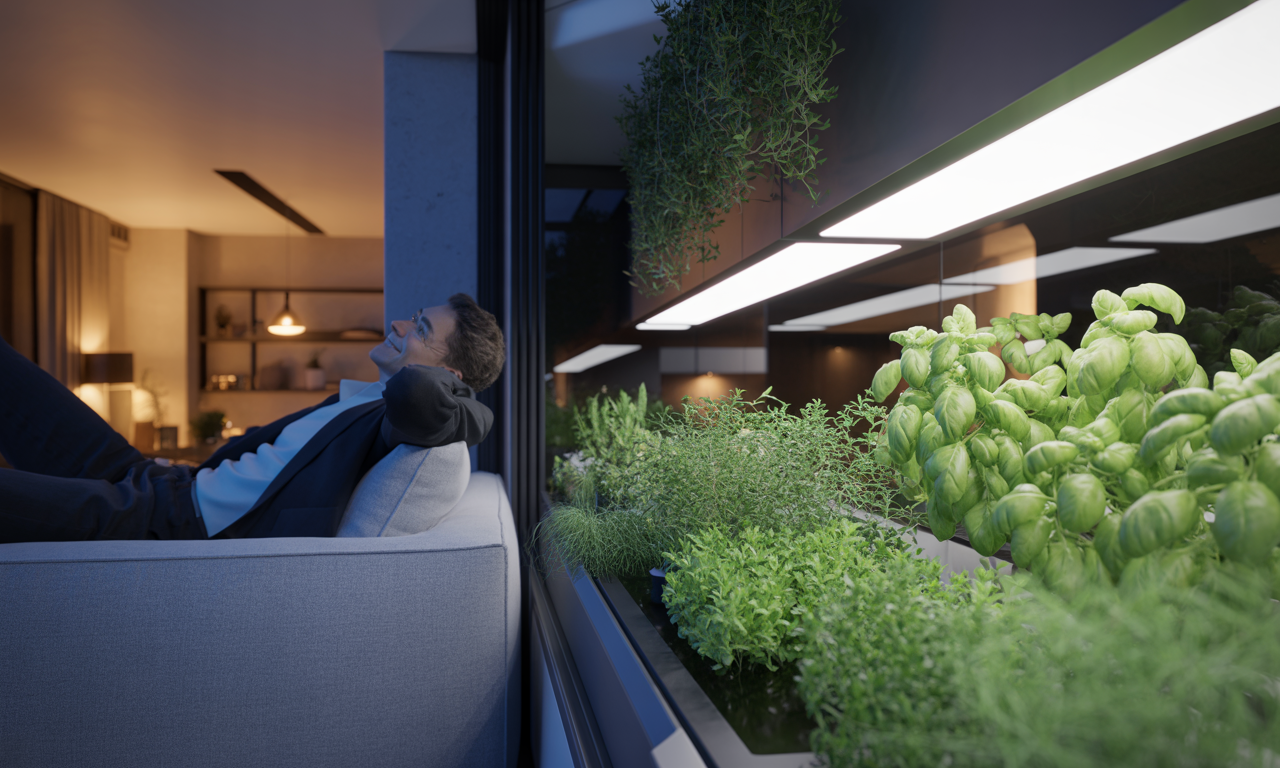
An ai indoor gardening system does more than automate basic tasks—it transforms indoor gardening into a reliable, efficient, and stress-free process. By combining real-time data with intelligent decision-making, these systems deliver consistent results that are difficult to achieve manually.
🌱 Consistent and Healthier Plant Growth
The problem:
Inconsistent care often leads to uneven growth, weak stems, or recurring plant stress.
The solution:
An ai indoor gardening system maintains stable growing conditions by continuously adjusting light, water, and nutrients. Plants grow in an optimized environment, resulting in stronger roots, healthier leaves, and predictable growth patterns.
Pro tip:
Consistency is the biggest advantage of AI-driven systems—plants respond best to stability.
⏱️ Time-Saving and Low Maintenance
The problem:
Indoor gardening can be time-consuming, especially for people with busy schedules.
The solution:
Once set up, an ai indoor gardening system manages daily care automatically. Routine tasks such as watering, lighting adjustments, and nutrient dosing no longer require constant attention.
Pro tip:
Most users spend more time enjoying their plants than maintaining them.
💧 Improved Water and Nutrient Efficiency
The problem:
Manual gardening often wastes water and nutrients due to overuse.
The solution:
Through closed-loop indoor gardening, an ai indoor gardening system delivers only what plants need. This reduces waste while improving absorption efficiency.
Pro tip:
Efficient resource use lowers long-term operating costs.
🌍 Ideal for Beginners and Urban Homes
The problem:
Limited space and lack of experience discourage many people from indoor gardening.
The solution:
An ai indoor gardening system simplifies plant care, making indoor gardening accessible even in small apartments. Beginners can achieve professional-level results without advanced knowledge.
Pro tip:
AI systems act like a built-in gardening expert available 24/7.
By improving growth quality, saving time, and reducing waste, an ai indoor gardening system delivers measurable benefits that make indoor gardening smarter, easier, and more sustainable.
🌿 Limitations and Challenges of an AI Indoor Gardening System
While an ai indoor gardening system offers powerful advantages, it is important to understand its limitations. Knowing these challenges helps gardeners set realistic expectations and choose the right system for their needs.
⚠️ Cost and Initial Setup Complexity
The problem:
Advanced systems often cost more than traditional indoor gardening tools. Sensors, automation hardware, and AI software increase the initial investment.
The explanation:
An ai indoor gardening system includes multiple components—environment sensors, automated lighting, irrigation controls, and software platforms. This complexity raises upfront costs compared to basic setups.
The solution:
Many users recover costs over time through reduced plant loss, efficient water use, and higher yields. Entry-level AI systems are also becoming more affordable.
Pro tip:
Start with a system that allows modular upgrades rather than an expensive all-in-one solution.
📡 Dependence on Technology and Connectivity
The problem:
Most AI systems rely on apps, cloud processing, or internet connectivity. Power outages or connectivity issues can temporarily disrupt automation.
The explanation:
A smart indoor grow system needs stable data flow to make accurate decisions. Without real-time input, automation may pause or revert to default settings.
The solution:
Choose an ai indoor gardening system with offline fail-safes or local processing capabilities for critical functions like watering.
Pro tip:
Systems with manual override options provide added security during technical issues.
🤖 Risk of Over-Automation
The problem:
Complete automation can sometimes hide early visual signs of plant stress if users rely only on apps and alerts.
The explanation:
Although an ai indoor gardening system monitors conditions accurately, plants still benefit from occasional human observation.
The solution:
Use AI as a support system, not a replacement for awareness. Combine automation with regular visual checks for best results.
Pro tip:
The most successful users treat AI as a partner rather than a substitute.
Understanding these limitations ensures that an ai indoor gardening system is used effectively, balancing technology with mindful plant care for long-term indoor gardening success.
🌿 How to Choose the Best AI Indoor Gardening System with Automation
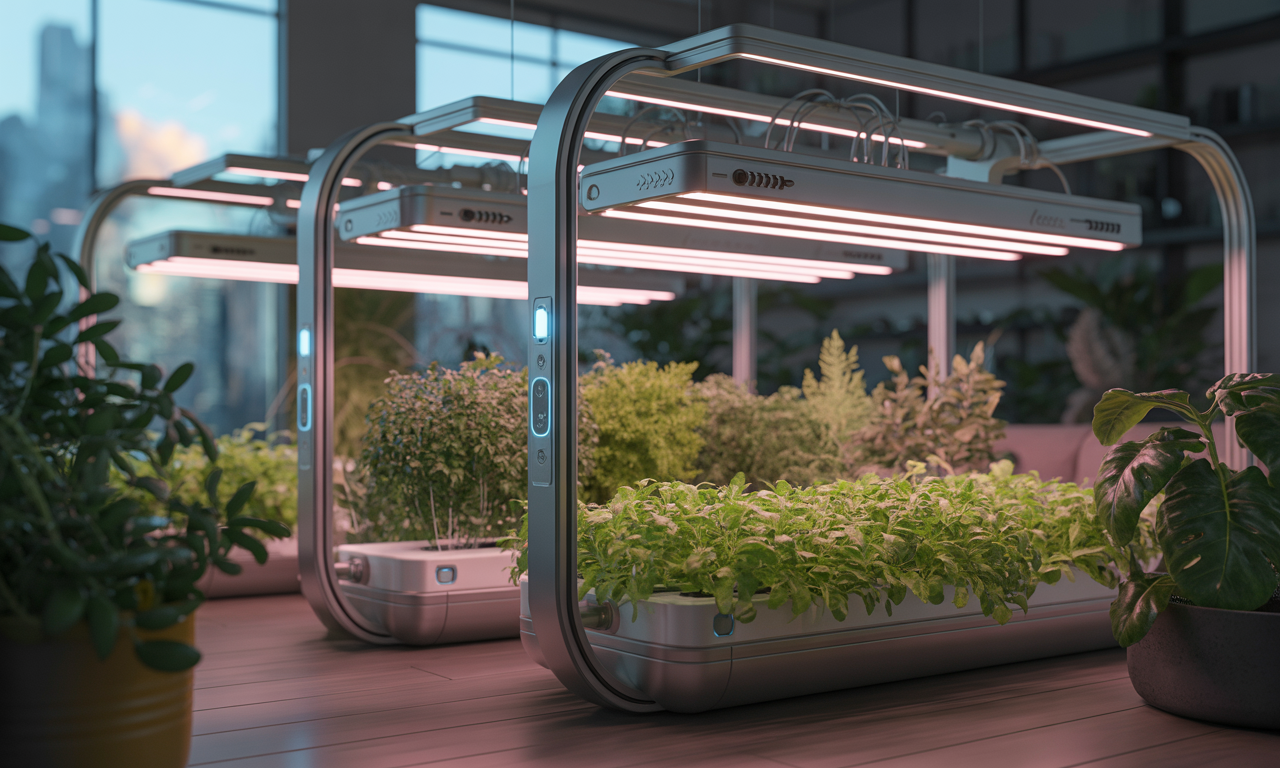
Selecting the right ai indoor gardening system is essential for long-term success. Not all systems offer the same level of intelligence, adaptability, or value. Understanding what truly matters will help you invest in a system that supports healthy plant growth rather than just basic automation.
✅ Must-Have Features in an AI Indoor Gardening System
The problem:
Many products are marketed as “smart” but rely on timers and preset rules. These systems lack real intelligence and fail to adapt to plant behavior.
The explanation:
A true ai indoor gardening system uses machine learning, real-time sensors, and feedback loops. It learns from plant responses and improves decisions over time.
The solution:
Look for systems that include:
- Multi-sensor monitoring (light, moisture, temperature, nutrients)
- Adaptive automation instead of fixed schedules
- Data-driven adjustments for different growth stages
- App-based control with real-time insights
Pro tip:
The more environmental variables a system tracks, the more accurate its automation becomes.
💰 Understanding Indoor Gardening System Price Ranges
The problem:
Buyers often struggle to judge whether higher prices actually reflect better performance.
The explanation:
The price of an ai indoor gardening system depends on sensor quality, automation depth, software intelligence, and scalability. Entry-level systems offer basic automation, while premium systems provide advanced learning and closed-loop control.
The solution:
Expect three general pricing tiers:
- Entry-level: Basic automation with limited AI features
- Mid-range: Adaptive systems with learning capabilities
- Premium: Fully autonomous indoor plant systems with advanced analytics
Pro tip:
Mid-range systems often provide the best balance between cost and intelligent performance.
🔍 Evaluating Smart Indoor Garden System Reviews
The problem:
Online reviews often focus on appearance or ease of setup rather than real performance.
The explanation:
A reliable smart indoor garden system review should evaluate automation accuracy, consistency of growth, and long-term reliability.
The solution:
When reading reviews, focus on:
- How well the system adapts over time
- Plant health after several growth cycles
- Software updates and ongoing support
Pro tip:
Systems that improve performance through updates deliver better long-term value.
By focusing on intelligence, adaptability, and real-world performance, you can choose an ai indoor gardening system that delivers consistent growth, efficient resource use, and true automation rather than simple convenience.
🌿 Smart Indoor Garden System Review Criteria (Expert Evaluation Framework)
Not all systems that claim to be intelligent actually deliver meaningful automation. Evaluating a product through a clear framework helps determine whether an ai indoor gardening system offers real value or just basic smart features.
📊 Automation Depth and Intelligence Level
The problem:
Many products automate tasks without learning from results. They follow instructions but do not improve performance.
The explanation:
A genuine ai indoor gardening system adjusts decisions based on plant response. It does not simply automate actions—it optimizes them through continuous learning.
The solution:
Assess whether the system:
- Learns from historical plant data
- Adapts to changing environments
- Improves accuracy over time
Pro tip:
Systems with visible performance improvement after a few growth cycles indicate true AI capability.
🧠 Sensor Accuracy and Data Integration
The problem:
Poor sensor quality leads to incorrect decisions, even with advanced software.
The explanation:
An ai indoor gardening system depends on accurate data from sensors monitoring light, moisture, temperature, and nutrients. Inaccurate inputs reduce automation reliability.
The solution:
Look for systems that integrate multiple sensors and cross-check data before making adjustments.
Pro tip:
Multi-sensor validation improves stability and prevents overcorrection.
🔧 Maintenance, Scalability, and Support
The problem:
Some systems work well initially but become difficult to maintain or upgrade.
The explanation:
A scalable ai indoor gardening system supports expansion, software updates, and long-term maintenance without replacing the entire setup.
The solution:
Check for:
- Modular design
- Firmware and app updates
- Responsive customer support
Pro tip:
Scalable systems grow with your indoor garden and protect your investment.
Using this framework ensures that an ai indoor gardening system is evaluated on intelligence, reliability, and long-term performance—not just appearance or marketing claims.
🌿 Who Should Use an AI Indoor Gardening System?
An ai indoor gardening system is designed for a wide range of users, but it is especially valuable for specific lifestyles and goals.
🏙️ Urban and Apartment Gardeners
Limited space and inconsistent sunlight make indoor gardening challenging. An ai indoor gardening system compensates by controlling light, water, and nutrients precisely.
⏳ Busy Professionals
For people with limited time, an ai indoor gardening system handles daily care automatically, reducing maintenance without sacrificing plant health.
🌱 Beginners and Learners
New gardeners often struggle with timing and balance. An ai indoor gardening system acts as a built-in guide, preventing common mistakes.
🔬 Tech-Savvy and Data-Driven Gardeners
Advanced users benefit from analytics, performance tracking, and optimization insights that only an ai indoor gardening system can provide.
By matching the system to the right user profile, an ai indoor gardening system delivers maximum value—making indoor gardening more accessible, reliable, and future-ready.
❓ Frequently Asked Questions (FAQ)
1. What is an AI indoor gardening system?
An ai indoor gardening system is a smart indoor growing setup that uses sensors, machine learning, and automation to manage light, water, and nutrients automatically. It learns from plant behavior and environmental data to optimize growth without manual guesswork.
2. How does an AI indoor gardening system differ from a regular automated system?
A regular automated system follows fixed rules or timers. An ai indoor gardening system adapts in real time by analyzing data, learning from past outcomes, and adjusting conditions continuously to suit plant needs.
3. Are AI indoor gardening systems suitable for beginners?
Yes. An ai indoor gardening system is ideal for beginners because it reduces common mistakes like overwatering or incorrect lighting. The system acts like a built-in expert, guiding plant care automatically.
4. How much does an AI indoor gardening system cost?
The price of an ai indoor gardening system varies by features and automation depth. Entry-level systems are more affordable, while advanced models with full automation and analytics cost more. Most users find mid-range systems offer the best balance of price and performance.
5. Do AI indoor gardening systems really improve plant growth?
Yes. By maintaining consistent conditions and responding instantly to plant stress, an ai indoor gardening system improves root health, leaf growth, and overall plant stability compared to manual care.
6. Is an AI indoor gardening system energy efficient?
Modern ai indoor gardening systems optimize light usage, watering cycles, and nutrient delivery. This reduces wasted energy and resources, making them more efficient than traditional indoor gardening setups.
7. Can an AI indoor gardening system work without the internet?
Some systems require internet connectivity for cloud processing, while others offer local decision-making with offline fail-safes. When choosing an ai indoor gardening system, look for one that supports offline operation for essential functions.
8. Can I still manually control an AI indoor gardening system?
Yes. Most systems allow manual overrides. An ai indoor gardening system is designed to assist, not completely replace, human involvement, giving users flexibility and control when needed.
🌿 Conclusion: Is an AI Indoor Gardening System Worth It?
Indoor gardening no longer has to rely on guesswork, rigid schedules, or constant trial and error. An ai indoor gardening system brings precision, consistency, and intelligence into plant care by learning directly from real-time conditions. By optimizing light, water, and nutrients automatically, it creates a stable indoor environment where plants can thrive with minimal human effort.
Throughout this guide, you’ve seen how an ai indoor gardening system uses machine learning, sensors, and closed-loop automation to reduce plant stress, improve growth consistency, and save time and resources. From adaptive lighting to predictive watering and nutrient balancing, every decision is data-driven rather than assumption-based.
However, the true value of an ai indoor gardening system depends on choosing the right level of automation for your needs. For beginners, it removes common mistakes. For busy professionals, it saves time. For advanced gardeners, it offers insight, control, and long-term optimization. When used correctly, AI does not replace gardening—it enhances it.
As indoor farming automation continues to evolve, intelligent systems will become a standard part of modern homes. Investing in an ai indoor gardening system today means stepping into a future where growing healthy plants indoors is easier, smarter, and more reliable than ever.
💬 Your Turn
Would you trust an ai indoor gardening system to manage your plants automatically? Or do you prefer a balance between AI control and hands-on care? Share your thoughts or questions in the comments—your experience could help others grow smarter indoors 🌱
💡Looking for something different? Check out our latest post here: https://gardeniva.com/diy-drip-irrigation-systems-guide-2025/